
Autumn leaves in Japan: typical peak by region and city
When maples and ginkgo turn in Hokkaido, Tokyo, Kyoto and Kyushu: average dates by city, how to read the 2026 forecast, and how to dodge crowds.
Every figure is checked against the sources listed below. See sources
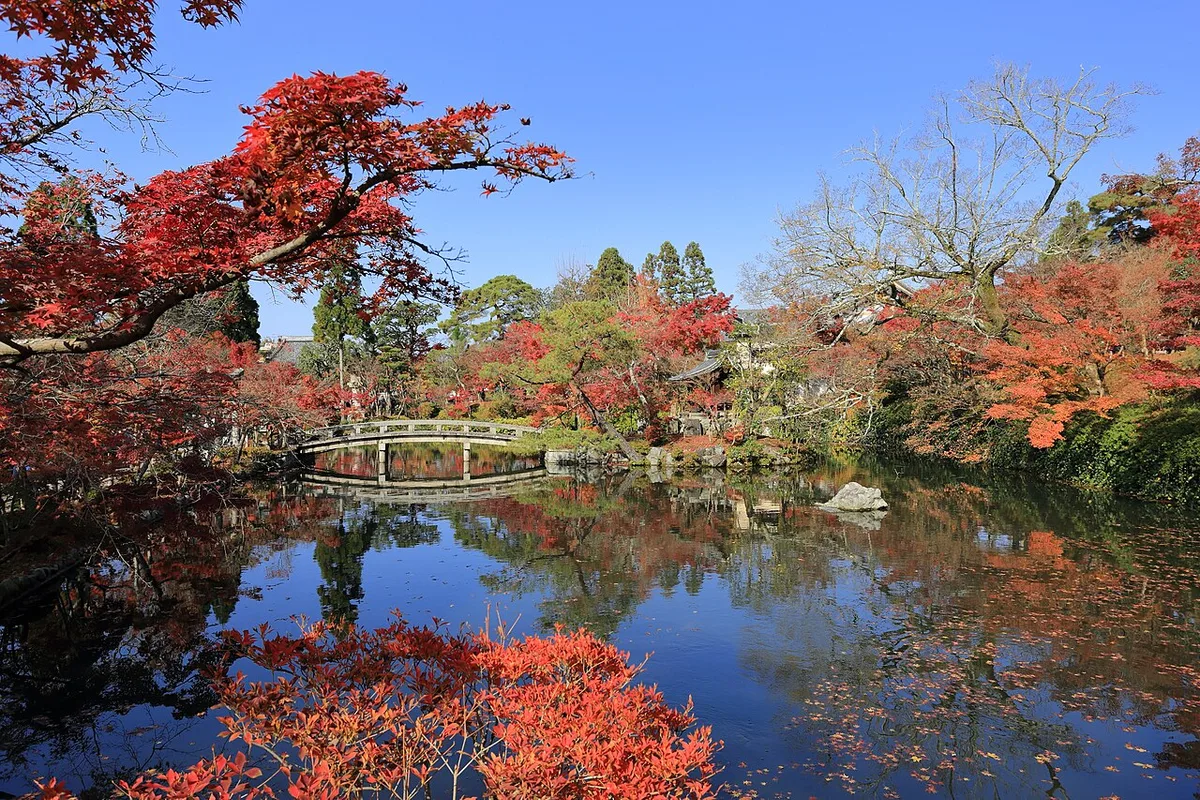

Japan’s autumn colour moves from north to south: JNTO dates the koyo season from late September through to early December, starting in Hokkaido and Tohoku and ending in Kanto and Kyushu.[5] In the cities, maples typically turn between late October in Sapporo and mid-December in Kagoshima, with Tokyo on November 28 and Kyoto on December 5 on average.[1] For 2026, Japan Meteorological Corporation’s forecast of October 1 puts Tokyo on its average date and Kyoto later than average.[1] Kyoto is at its most crowded from mid-November to early December.[6]
Key facts
- Season overall: late September to early December, north to south (JNTO).[5]
- Average maple dates: Sapporo October 28, Tokyo November 28, Kyoto December 5, Fukuoka December 1.[1]
- 2026 forecast (JMC, released October 1, 2026): Tokyo November 28, Kyoto December 11.[1]
- Kyoto crowds peak from mid-November to early December.[6]
- Holidays to plan around: Culture Day (November 3) and Labor Thanksgiving Day (November 23).[8]
When do the leaves turn in each region?
The table shows the average date for each city and the 2026 forecast. All figures come from Japan Meteorological Corporation (JMC), a private forecaster, whose forecast of October 1, 2026 is the latest at the time of writing.[1] The dates refer to one sample tree in each city, not to a famous viewing spot (see below).
| City | Maple (red), average | Ginkgo (yellow), average | Maple, 2026 forecast | Ginkgo, 2026 forecast |
|---|---|---|---|---|
| Sapporo | October 28 | November 4 | November 4 | November 3 |
| Sendai | November 21 | November 23 | November 24 | November 29 |
| Nagano | November 12 | November 10 | November 21 | November 14 |
| Kanazawa | November 24 | November 10 | November 30 | November 10 |
| Tokyo | November 28 | November 23 | November 28 | November 26 |
| Nagoya | November 28 | November 18 | December 2 | November 17 |
| Kyoto | December 5 | November 24 | December 11 | November 27 |
| Osaka | December 1 | November 22 | December 4 | November 24 |
| Hiroshima | November 22 | November 15 | November 28 | November 21 |
| Fukuoka | December 1 | November 20 | December 7 | November 28 |
| Kagoshima | December 15 | November 25 | December 10 | November 27 |
Sources: averages[1] [1]; forecasts[1] [1].
JMC’s averages match the official normals where the Japan Meteorological Agency (JMA) publishes them: the Kyoto Local Meteorological Office gives December 5 for maple and November 24 for ginkgo.[2] JMA normals are the average of the 30 years of observations from 1991 to 2020.[2]
Events
Autumn leaves in Kyoto
- Place
- Kyoto
- Period
- Typically mid-November to early December; JMA normal maple coloring date December 5 (1991–2020 average)
Events
Autumn leaves in Tokyo
- Place
- Tokyo
- Period
- Typically late November; average maple date November 28, average ginkgo date November 23 (Japan Meteorological Corporation)
Events
Autumn leaves in Sapporo
- Place
- Sapporo
- Period
- Typically late October to early November; average maple date October 28, average ginkgo date November 4 (Japan Meteorological Corporation)
If Kanazawa is on your route, its maple average falls in late November, which suits a garden visit in the Kanazawa guide.
Why the city date can differ from famous spots
JMA observes one main sample tree at each observatory, in principle on its own grounds. Its “coloring day” is the first day on which most of that tree has turned red and almost no green remains.[4] A valley, a mountain slope or a temple garden in the same region can turn on a different day. For a specific place, check a forecaster’s spot forecast: JMC covers approximately 700 viewing locations and gives foliage information by altitude for approximately 3,000 mountains.[1] For a worked example near Kanazawa, the Natadera autumn leaves guide shows how to use the city date for a temple outside it.
That matters most for mountain towns. If you are heading for the Hida highlands, compare the Nagano row with the plan in the Takayama guide.
Maples vs ginkgo
In most cities in the table, the ginkgo average comes before the maple average, so yellow avenues often peak before red temple gardens. Sapporo and Sendai are the exceptions.[1]
How do I read this year’s forecast?
JMA publishes observations, not forecasts. Its dates appear only after the sample tree has turned. In 2025, for example, Tokyo’s maple turned on November 23, 5 days earlier than normal, and Kyoto’s on December 10, 5 days later.[3]
Forecasts come from private companies such as Japan Meteorological Corporation, which reissue them during the season. When you read a forecast, check three things:
- Who made it and when. JMC’s current forecast was released on October 1, 2026, and the next is due in early November.[1]
- What date it predicts. JMC estimates the first day on which most of the tree’s leaves turn red or yellow, on the JMA sample-tree standard.[1] Some other pages list a “start of colour” or a “best viewing” window instead; these are not the same date.
- Which place it covers. A city row is one tree. A named garden or mountain needs its own spot forecast.
For 2026, JMC puts Tokyo’s maples on November 28, the same as its average, and Kyoto’s on December 11, against an average of December 5.[1]
Which places turn first?
JNTO describes the order as north to south: Hokkaido and Tohoku first, then Kanto, then Kyushu, with November the best month in most of the country.[5] In the city averages above, Sapporo comes first and Kagoshima last.[1]
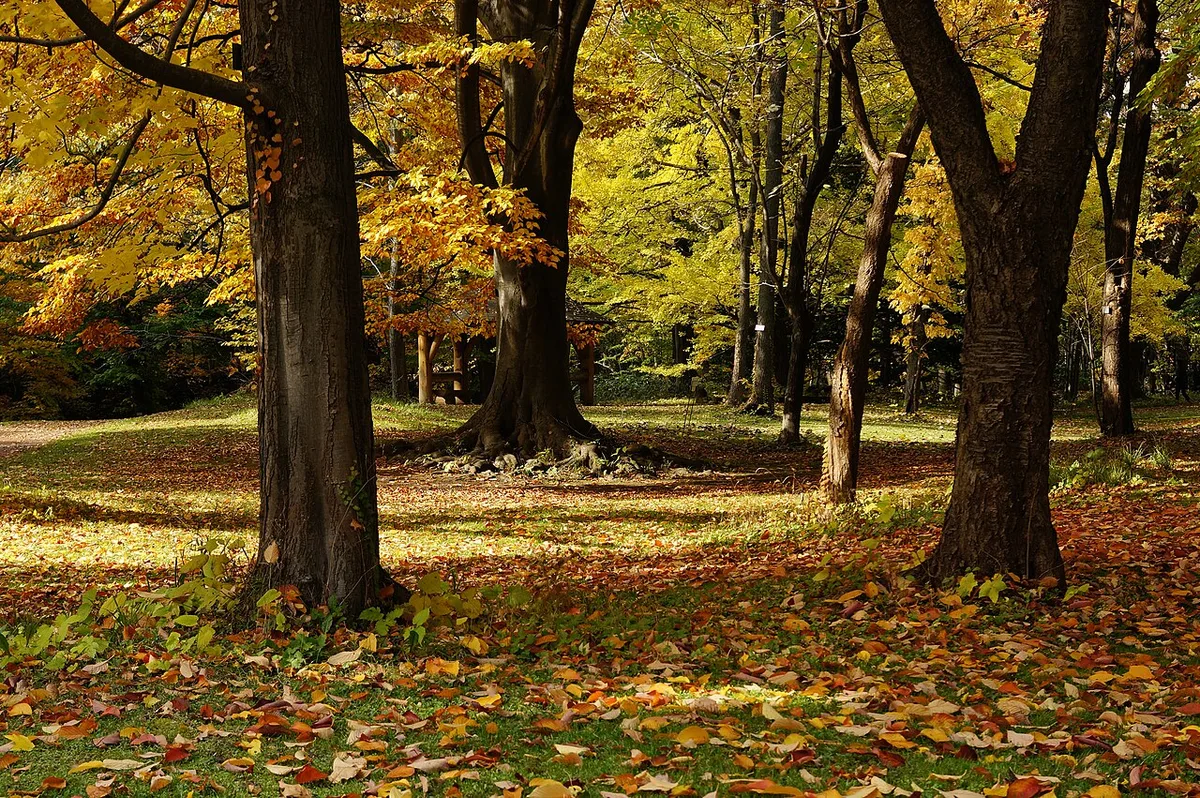

- Late October: Sapporo.
- November: Nagano, Sendai, Hiroshima and Kanazawa, then Tokyo and Nagoya.
- December: Osaka, Fukuoka, Kyoto and Kagoshima.
If Tohoku is on your route, the Hiraizumi guide covers its temples and how long to stay.
If you plan a walking trip in the south, the Kumano Kodo guide covers the trail itself.
How do I avoid the crowds?
The Kyoto Online Tourist Information Center names mid-November to early December as one of the two busiest seasons in Kyoto, together with the cherry blossom season.[6] That is also the window when Kyoto’s maples turn.
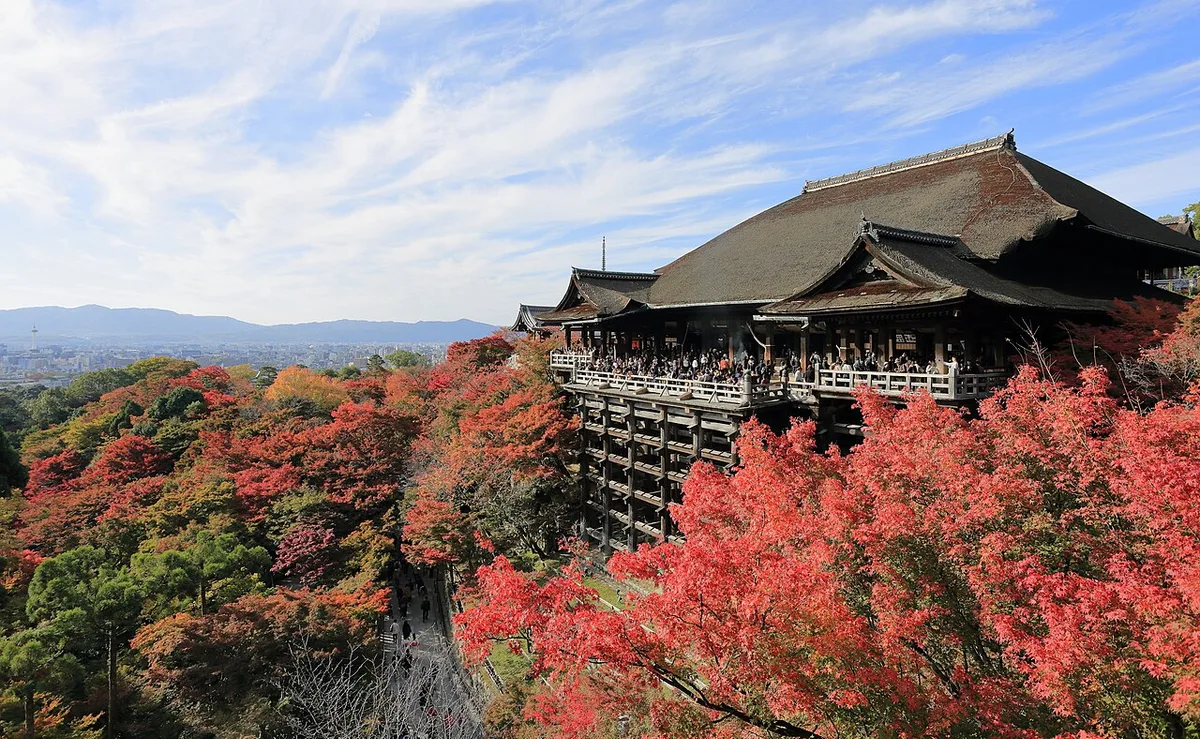

- Check the congestion forecast. The Kyoto Travel Congestion Forecast rates congestion on a 5-point scale for 11 well-known spots, by date, time of day and expected weather.[7] Shifting your visit to a quieter hour is often enough.
- Go early or on a weekday. Compare several days and hours in the congestion forecast before you fix the plan.
- Pick a region outside Kyoto’s peak. Northern cities turn in October and early November, before the Kansai rush.[1]
- Sleep somewhere else. If Kyoto lodging is full, staying in Osaka and commuting is an option; see Kyoto to Osaka by train.
What should I book early?
Book early for autumn
- Kyoto accommodation for the second half of November and early December
- Shinkansen seats on holiday weekends
- Tickets for evening illuminations at temples and gardens, where sold in advance
- Onsen ryokan stays in mountain areas
- Your rail pass decision
For reserved seats between Tokyo and Kyoto, see Tokyo to Kyoto by Shinkansen.
For how an onsen ryokan stay works and what it includes, see the ryokan guide.
If you are weighing a nationwide rail pass for a foliage trip, read the Japan Rail Pass review.
Frequently asked questions
What happens to the leaves if it rains?
Keep your plan, but wear shoes with grip: garden paths and stone steps get slippery when wet. In Kyoto, the congestion forecast lets you select rainy or heavy-rain weather for its crowd estimate.
What is the best time of day to see the leaves?
Aim for the opening hour of the place you want to see. In Kyoto, the congestion forecast shows how crowds change by time of day at well-known spots.
I missed the peak. Where can I still see colour?
Go south. In the city averages, Osaka, Fukuoka, Kyoto and Kagoshima turn last. Early in the season, go north instead.
Are the night illuminations worth it?
They add an evening visit if you have only one day in a city. Dates, hours and tickets are set by each temple or garden, so check the venue’s own site; this guide does not list them.
Is the autumn forecast the same as the cherry blossom forecast?
No. The autumn forecast covers maples and ginkgo; cherry blossom forecasts cover cherry trees and are published separately, in spring.
Sources
- Release of 2026 Autumn Foliage Forecast (2nd forecast) — Japan Meteorological Corporation (checked )
- Plant phenology observations — Kyoto Local Meteorological Office (JMA) (checked )
- Maple coloring dates 2025–2026 (JMA) (checked )
- Guidelines for phenological observation (JMA) (checked )
- Autumn Leaves (Koyo) of Japan — JNTO (checked )
- Which season sees the largest numbers of tourists? — Kyoto Online Tourist Information Center (checked )
- Kyoto Travel Congestion Forecast — Kyoto City Tourism Association (checked )
- National holidays (Cabinet Office) (checked )