
Kumano Kodo in Winter (2026–27): Open, but Sunset at 16:50
Yes, the Nakahechi stays open from December to February. Sunset is near 16:50 in December, some buses and inns stop, and a river bath opens on December 1.
Every figure is checked against the sources listed below. See sources
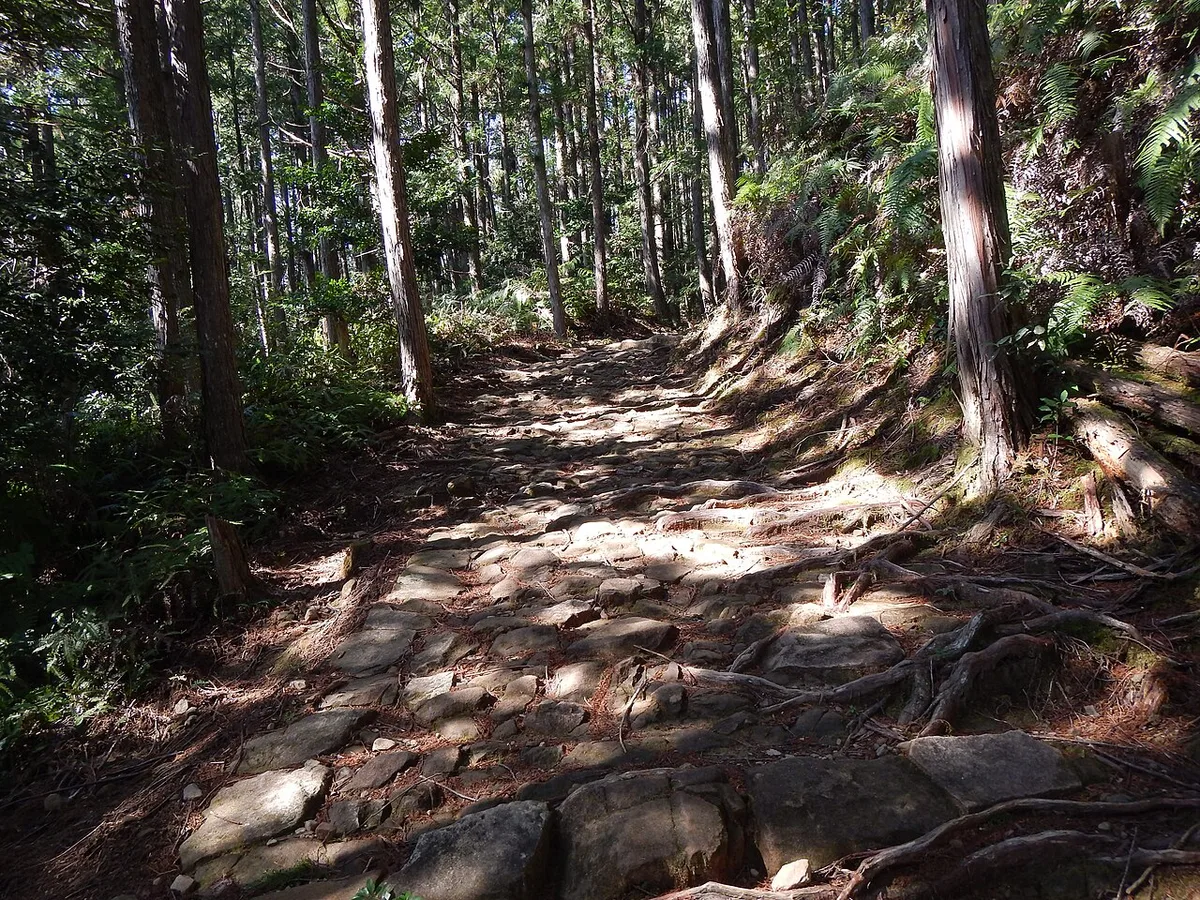

Yes. The Kumano Kodo Nakahechi (中辺路) is open year-round, winter included.[1],[2] In December, January and February the limit is daylight and services, not snow: in mid-December the sun rises at 6:57 and sets at 16:51 in Wakayama City, just under 10 hours of daylight,[3] some buses run less often, and some inns close in the off-season or over the year-end holidays.[1] Plan shorter days, book early, and avoid the New Year week if you want a full choice of inns.
Key facts
- Open in winter: the Nakahechi route is open year-round.[1],[2]
- Daylight: sunset at 16:50 on December 1 and 17:00 on January 1 (Wakayama City).[3][4]
- Snow: rare; cold fronts from the end of December to the end of February can bring snow to the passes.[2]
- Closed in winter: the Kohechi from Koyasan, from mid-December to mid-March.[15],[1]
- Year-end: some inns close or are fully booked over the holidays.[1]
- Only in winter: the Sennin-buro river bath at Kawayu Onsen, December 1 to the end of February.[1],[18]
How short are the days in December, January and February?
Short enough to change your plan. The table gives sunrise and sunset for Wakayama City from the National Astronomical Observatory of Japan (NAOJ).
| Date | Sunrise | Sunset |
|---|---|---|
| December 1, 2026 | 6:47 | 16:50 |
| December 15, 2026 | 6:57 | 16:51 |
| January 1, 2027 | 7:05 | 17:00 |
| January 15, 2027 | 7:05 | 17:12 |
| February 1, 2027 | 6:57 | 17:29 |
| February 15, 2027 | 6:45 | 17:42 |
| February 28, 2027 | 6:30 | 17:54 |
Figures from NAOJ’s December,[3] January[4] and February[5] tables. In mid-December you have just under 10 hours between sunrise and sunset; by the end of February it is more than 11 hours.
The trail itself loses light sooner than the table suggests. The Tanabe City Kumano Tourism Bureau notes that it gets dark earlier in the valleys where most villages lie, and it advises leaving early so that you arrive between 15:00 and 17:00, with a light source in your pack.[2]
Which stages still fit a winter day?
Set the bureau’s walking times against those hours. The stage details, inns and day plans are in the Nakahechi guide to stages and days; here is only what changes in winter.
| Stage | Distance | Bureau walking time | In December and January |
|---|---|---|---|
| Takijiri-oji to Chikatsuyu-oji | ~13.3 km | 6~8 hrs | Fits only with a start soon after sunrise |
| Chikatsuyu-oji to Kumano Hongu Taisha | ~24.5 km | 9~12 hrs | Longer than the daylight: shorten it by bus |
| Hosshinmon-oji to Kumano Hongu Taisha | 7 km | 2~3 hrs | Fits easily |
Distances and times from the bureau’s route pages.[7][8][8],[9]
The long second day is the one to change. A walking time of 9~12 hrs does not fit into a day with just under 10 hours of light, before any rest stops.[8] One winter fix is to ride the bus to Hosshinmon-oji and walk only the last 7 km to the shrine.[8],[9]
In winter, buses reach Hosshinmon-oji at 8:37, 9:45, 10:45, 12:30 and 14:03. The 7:35 and 15:28 runs on the bureau’s timetable dated Sep. 19th. 2026 operate only from April 1st to November 30th.[10],[11] With a walk of 2~3 hrs and a sunset before 17:00 in December, the 12:30 bus is the last one that leaves a margin.[8],[9][3]
Is there snow or ice on the Kumano Kodo in winter?
Usually not, but do not plan on that. The bureau’s winter page describes the area as milder than the rest of Japan, with very little snow in the southern peninsula and evergreen forests that stay green.[1] Its Tips & Safety page is more careful: from the end of December to the end of February, large cold fronts can bring freezing temperatures and snow, which often melts during the day but can stay for a couple of days on the passes.[2]
The weather records back up the second page. At the Japan Meteorological Agency’s Kurisugawa station in Wakayama, the 1991–2020 normals give an average daily low of -1.2 °C in January and -1.0 °C in February, so expect temperatures below freezing on many early mornings.[6]
| Month | Average daily high | Average daily low |
|---|---|---|
| December | 13.0 °C | 0.7 °C |
| January | 10.5 °C | -1.2 °C |
| February | 11.6 °C | -1.0 °C |
JMA normals for Kurisugawa, 1991–2020.[6]
The bigger risk is underfoot. The bureau says most injuries on the Kumano Kodo come from slips on stone- and root-lined paths, and the old cobbled steps are especially slippery when wet.[2] Walk them slowly on cold, damp mornings.
For clothing, the bureau suggests an extra fleece or merino layer, a light down or multi-season parka, a knit cap, gloves, thicker socks and an outer shell.[1],[2]
Do buses and inns run in winter?
Most do, with gaps. The bureau warns that some buses run on a limited schedule or not at all in winter, and that its timetables change, so check the current PDF for each leg before you book.[1],[14] The two seasonal runs to Hosshinmon-oji are one example.[10],[11]
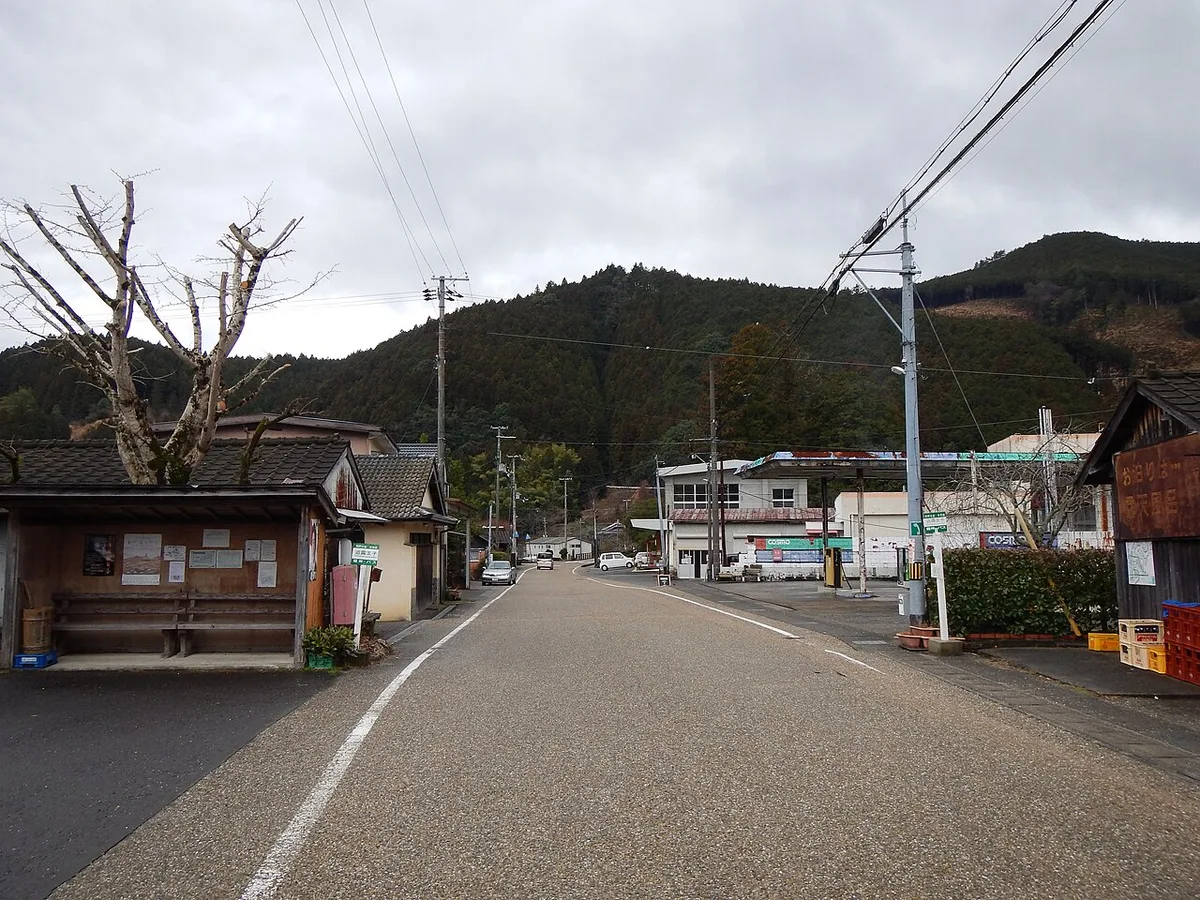

Inns are the other gap. Some close in the off-season or over the year-end holidays, and others fill up then because it is a peak time for Japanese travellers. Outside the holidays, the bureau notes that fewer visitors can make your first-choice inn easier to get.[1]
Book the inns along the trail through KUMANO TRAVEL, which describes itself as the official community reservation system for the region.[16] What to expect inside a Japanese inn is in the ryokan guide.
What happens on the Kumano Kodo at New Year?
New Year is a peak time for travel in Japan. The bureau warns that inns may be closed or booked solid over the year-end holidays.[1] Buses run as on holidays: on the bureau’s timetables, weekday-only runs stop from Dec. 30th to Jan. 3rd, and weekend-and-holiday runs operate on those days instead.[10],[12]
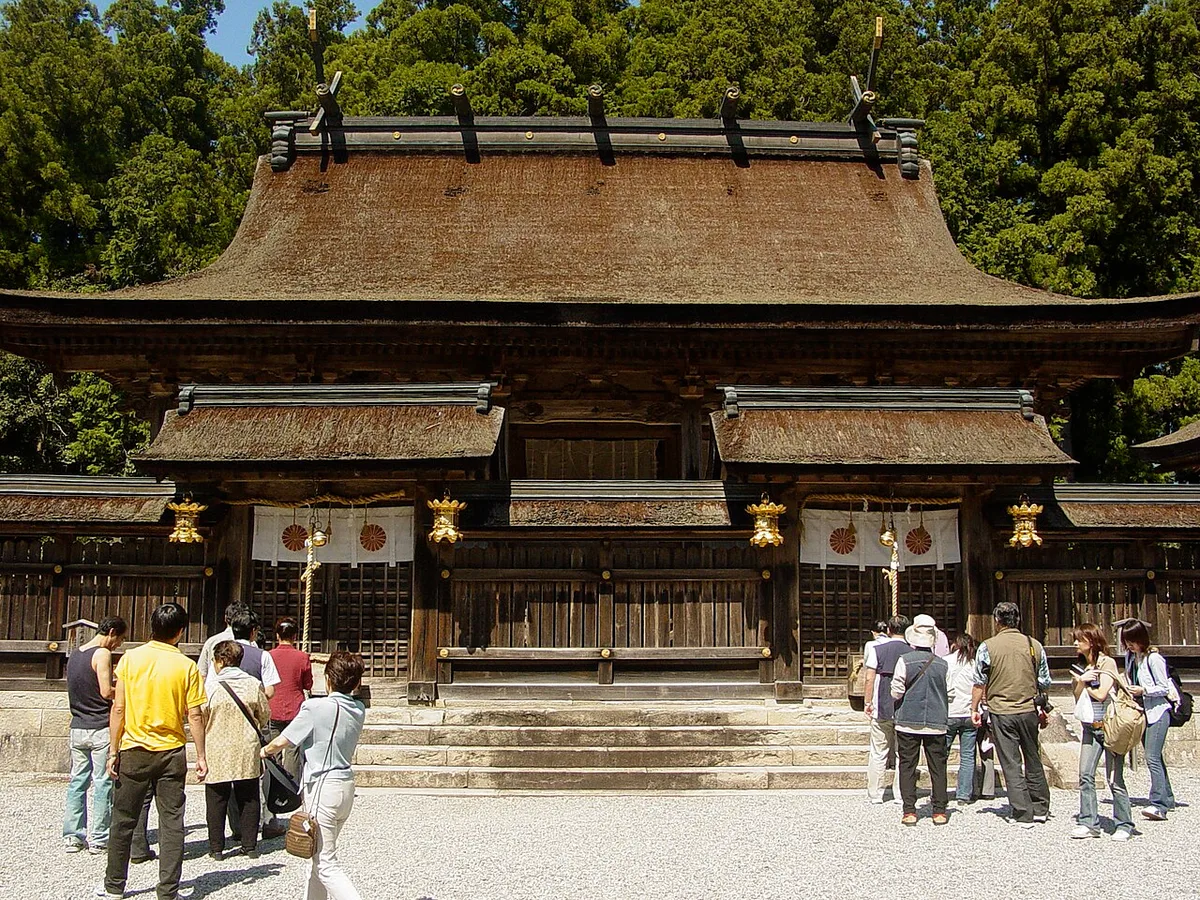

Kumano Hongu Taisha (熊野本宮大社) opened at midnight on New Year’s Day 2026: its gates were open from 0:00 to 17:00 on January 1 and from 8:00 to 17:00 on January 2 to 15.[17] Its schedule that year listed the Joya-sai rite at 17:00 on December 31, the 開寅祭 rite at 2:00 and the Saitan-sai at 6:00 on January 1, with limited seating for those attending.[17] The shrine publishes each New Year’s schedule on its own site, so check it once it appears for the coming New Year.
What can you only do in winter?
The Sennin-buro (仙人風呂) at Kawayu Onsen is the reason some walkers choose winter. The river is dammed to make a large open-air bath, open only from December 1 to the end of February, and the bureau calls it Japan’s only onsen bath in a river.[1],[18] Entry is free, from 6:30 to 22:00 with last entry at 21:30, and swimwear is required. The Kumano Hongu Tourist Association says the bath may be closed after heavy rain and its opening can be delayed by weather.[18]
For the baths at your inn, read the onsen etiquette and tattoo rules first, especially if you have tattoos or have not used a Japanese bath before.
Winter has its own views too. Some trees still show autumn colours in late November and early December, and plum blossoms open in late January and early February.[1] For autumn colour timing across Japan, see the autumn leaves calendar.
Only have one day, or want to add Nachi? The short daylight matters even more on a day trip; the Kumano Kodo day walk from Osaka covers the Daimonzaka to Nachi walk and which section fits in a day.
Frequently asked questions
Can I walk the Kohechi from Koyasan in winter?
No. The bureau says the Kohechi is technically closed from mid-December to mid-March because its passes may be snow-bound; only the southernmost pass, Hatenashi-toge, stays open year-round.[15],[1] The bus between Kii-Tanabe and Koyasan also has no winter service; it runs from April 1st to Nov. 30th.[13]
Do the buses run on New Year's Day?
Sources
- Visiting the Kumano Kodo in Winter (Tanabe City Kumano Tourism Bureau) (checked )
- Kumano Kodo Tips & Safety (Tanabe City Kumano Tourism Bureau) (checked )
- Sunrise and sunset, Wakayama, December 2026 (NAOJ) (checked )
- Sunrise and sunset, Wakayama, January 2027 (NAOJ) (checked )
- Sunrise and sunset, Wakayama, February 2027 (NAOJ) (checked )
- Kurisugawa (Wakayama) climate normals by month (Japan Meteorological Agency) (checked )
- Takijiri-oji to Chikatsuyu-oji (Tanabe City Kumano Tourism Bureau) (checked )
- Chikatsuyu-oji to Kumano Hongu Taisha (Tanabe City Kumano Tourism Bureau) (checked )
- Suggested Walks (Tanabe City Kumano Tourism Bureau) (checked )
- Kii-Tanabe Station – Hongu – Hosshinmon-oji bus timetable (Tanabe City Kumano Tourism Bureau, PDF) (checked )
- Kii-Tanabe Station, Shirahama to Kumano Hongu Taisha bus timetable (Tanabe City Kumano Tourism Bureau, PDF) (checked )
- Hongu Taisha, Kawayu, Yunomine, Watarase bus timetable (Tanabe City Kumano Tourism Bureau, PDF) (checked )
- Kii-Tanabe – Ryujin Onsen – Koyasan bus timetable (Tanabe City Kumano Tourism Bureau, PDF) (checked )
- Bus (Tanabe City Kumano Tourism Bureau) (checked )
- Kohechi (Tanabe City Kumano Tourism Bureau) (checked )
- About KUMANO TRAVEL (checked )
- 初詣について (Kumano Hongu Taisha) (checked )
- 仙人風呂 (Kumano Hongu Tourist Association) (checked )