
Kumano Kodo Nakahechi: stages, days, inns and luggage
Walking the Kumano Kodo Nakahechi for the first time: stage distances and difficulty, 2- to 5-day plans, booking inns and luggage, and trains from Osaka.
Advertising: this article contains affiliate links. We may earn a commission at no extra cost to you.
Every figure is checked against the sources listed below. See sources
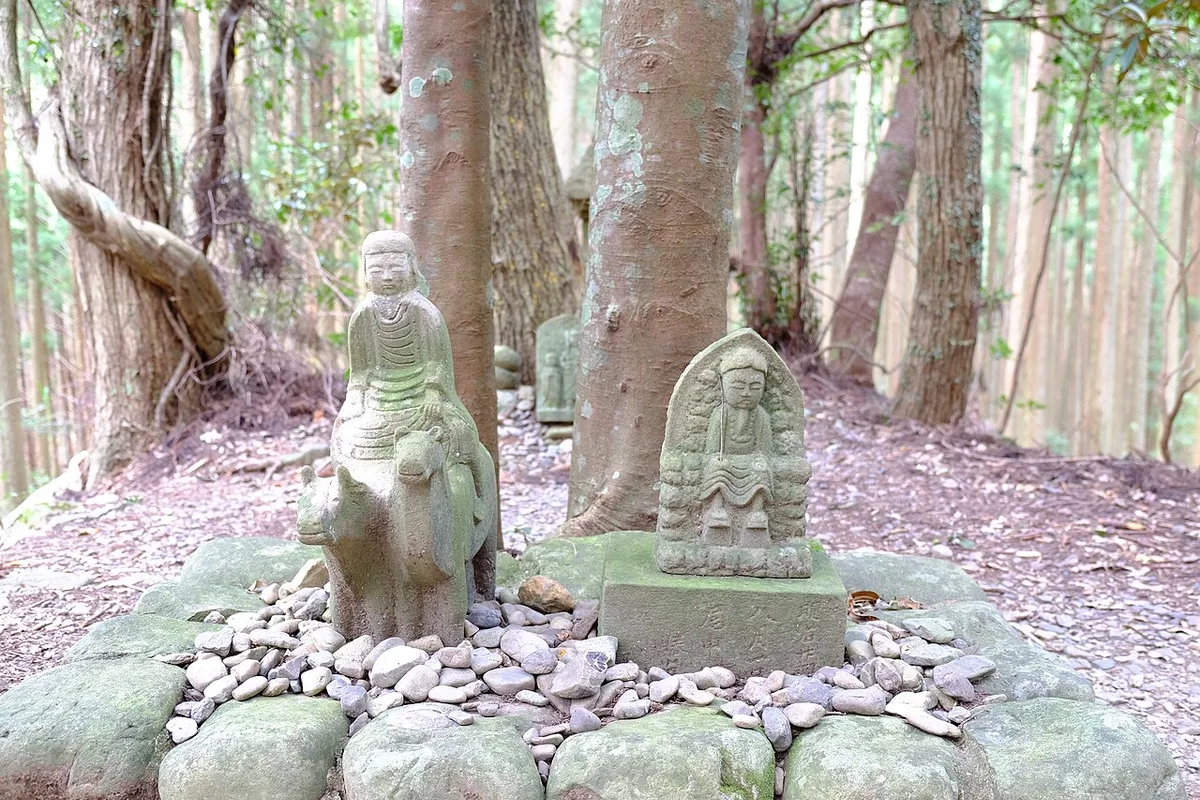

The Nakahechi (中辺路) is the trail most people mean by “the Kumano Kodo (熊野古道)”: the Tanabe City Kumano Tourism Bureau calls it the core trail of the pilgrimage network, with English signs, maps and a luggage shuttle in place.[1] It suits fit walkers with 2 days or more, who are happy with steep forest climbs and early starts. If you want a gentle stroll instead, walk only the last section from Hosshinmon-oji to Kumano Hongu Taisha in half a day.[5],[3]
Key facts
- Worth it for: walkers who want a multi-day mountain pilgrimage route with inns at the end of each day.
- Time needed: 2 days for Takijiri-oji to Kumano Hongu Taisha; half a day for Hosshinmon-oji to Kumano Hongu Taisha.[3]
- Difficulty: Day 2 (Chikatsuyu-oji to Kumano Hongu Taisha) is rated 4 on the bureau’s 1 to 5 scale.[5]
- Start: JR Kii-Tanabe Station, then the bus to Takijiri-oji.[3]
- Closing days: none; the route is open year-round.[10]
Places
Kumano Kodo (Nakahechi)
- Nearest Station
- JR Kii-Tanabe Station, then bus to Takijiri-oji (bus timetable
- Time Needed
- 2 days for Takijiri-oji to Kumano Hongu Taisha; half a day for Hosshinmon-oji to Kumano Hongu Taisha
Which stages should I walk?
The bureau splits the Nakahechi into short sections and rates each one from 1 (easy, close to a bus stop) to 5 (long, steep and remote).[2]
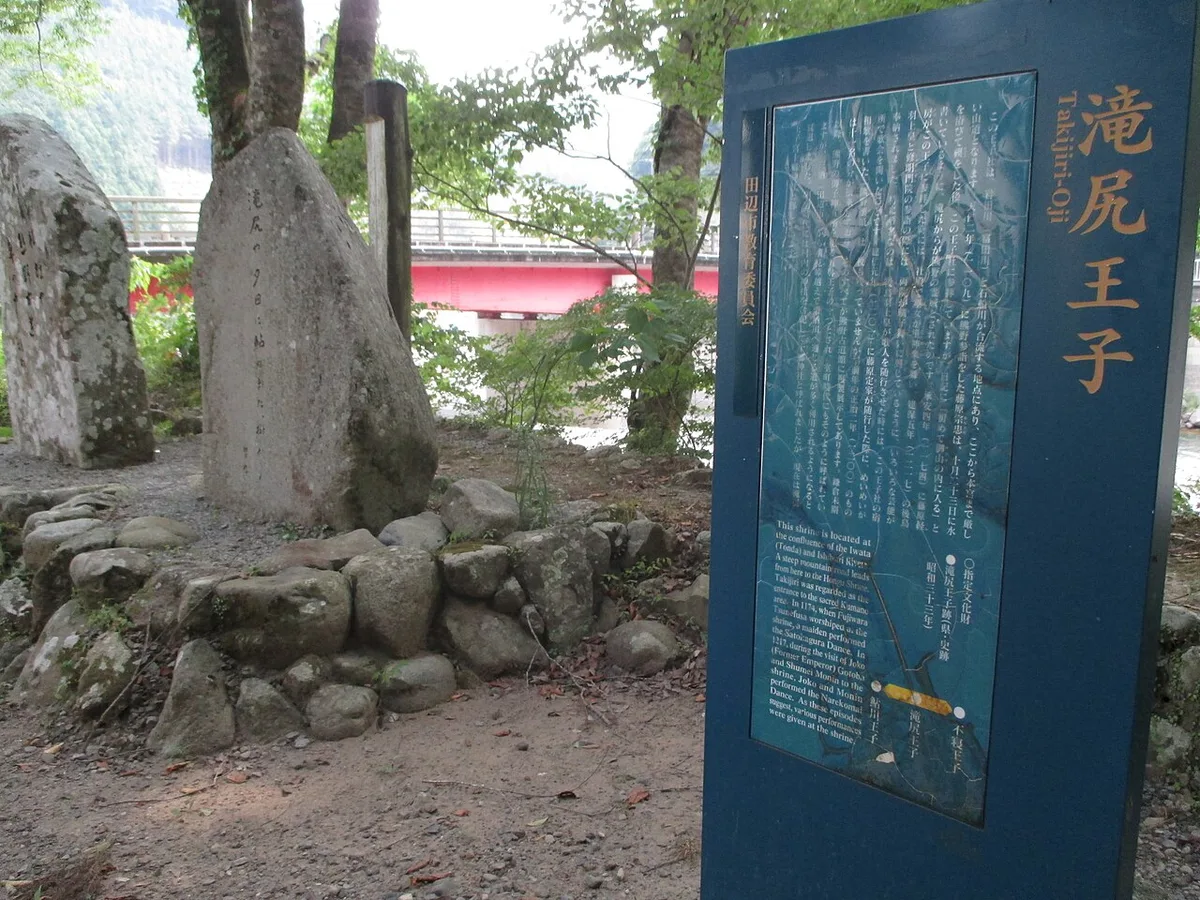

| Section | Distance | Walking time | Rating |
|---|---|---|---|
| Takijiri to Takahara | 3.7 km | ~2 hr | 2.5 |
| Takahara to Gyuba-doji Guchi | 8 km | ~3 hr | 3 |
| Gyuba-doji Guchi to Chikatsuyu-oji | 1.3 km | ~30 min | 1 |
| Chikatsuyu-oji to Tsugizakura-oji | 4 km | ~1 hr 15 min | 1.5 |
| Tsugizakura-oji to Hosshinmon-oji | 13.5 km | ~4.5 hr | 3 |
| Hosshinmon-oji to Kumano Hongu Taisha | 7 km | ~2 hr | 2 |
The rating combines distance, time, elevation gain and descent, terrain, bus access and isolation, so a short section can still rate high if it is remote.[2]
How many days do I need?
Two days is the bureau’s standard plan from Takijiri-oji to Kumano Hongu Taisha. Sleep in Tanabe the night before, because the walk starts with a morning bus.[3]
| Item | Half day | 2 days | 4 to 5 days |
|---|---|---|---|
| Route | Hosshinmon-oji to Kumano Hongu Taisha | Takijiri-oji to Kumano Hongu Taisha | Takijiri-oji to Hongu, then on to Nachi |
| Distance | approx 7 kms | approx. 16 kms, then approx. 24.5 kms | adds approx 13 kms and approx 14.5 kms |
| Walking time | around 2~3 hrs | around 6 hours, then around 9 hours | adds around 5 hrs 30min and around 7~8 hrs |
| Night stops | Hongu area | Chikatsuyu area, then Hongu area | adds Koguchi |
Sources for the table: the half-day walk,[5],[3] the 2-day plan[3] and the Hongu to Nachi extension.[3]
The second day is the hard one. The bureau’s route page gives Takijiri-oji to Chikatsuyu-oji as 13.3 km and 68 hrs with ~1010 m of climbing.[4] Chikatsuyu-oji to Kumano Hongu Taisha is 24.5 km and 912 hrs with ~1100 m of climbing.[5]
If you have more time, the bureau’s 4-day and 5-day sample treks add the Kogumotori-goe and Ogumotori-goe to Kumano Nachi Taisha after a rest night in the Hongu area.[3]
What is there to see?
The trail links the Kumano Sanzan, the three Grand Shrines of Kumano. The shrines and the routes between them are part of the UNESCO World Heritage site “Sacred Sites and Pilgrimage Routes of the Kii Mountain Range”, inscribed on July 7, 2004.[14] For how to behave at the shrines, see the Japan etiquette guide.
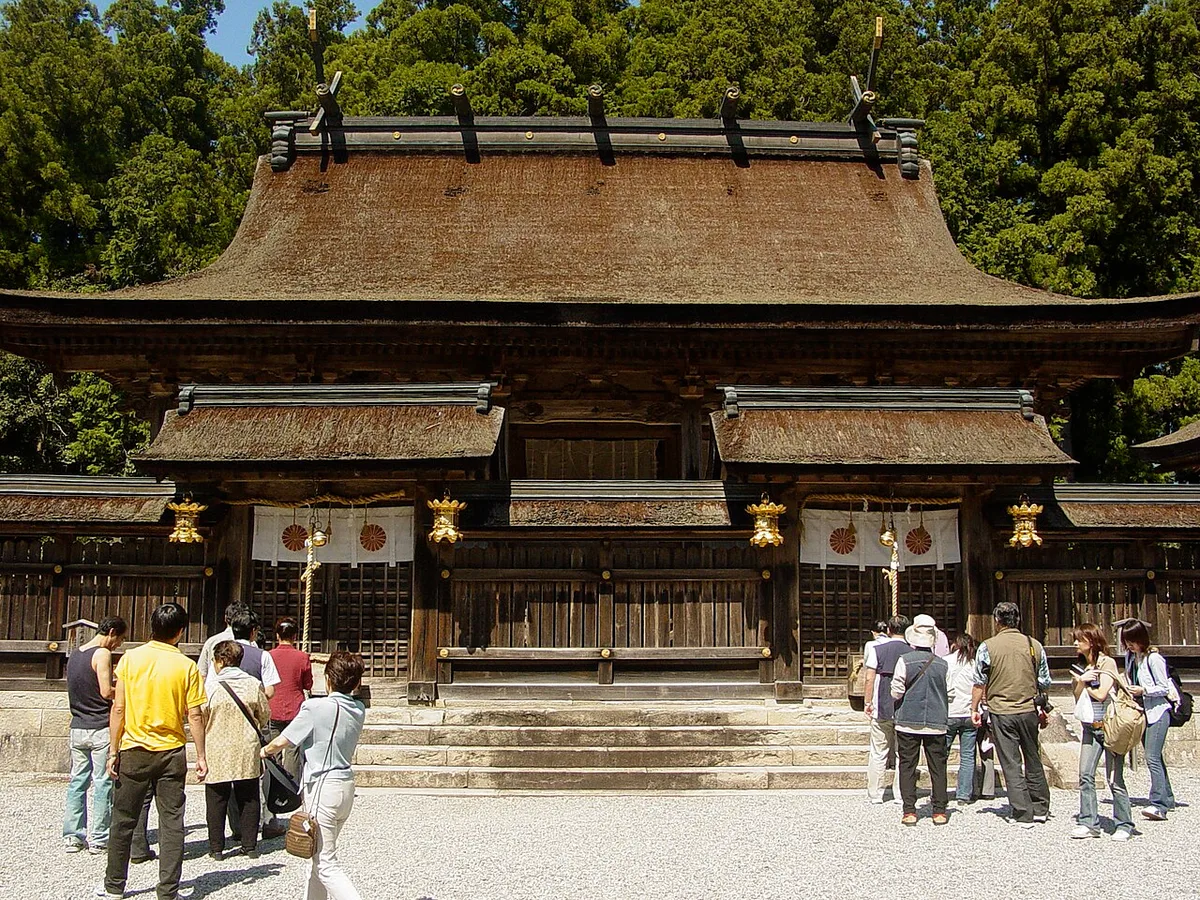
Kumano Hongu Taisha
Kumano Hongu Taisha (熊野本宮大社) is the end point of the Nakahechi and the head shrine of over 3,000 Kumano shrines across Japan.[14],[15]

Kumano Hayatama Taisha and Kumano Nachi Taisha
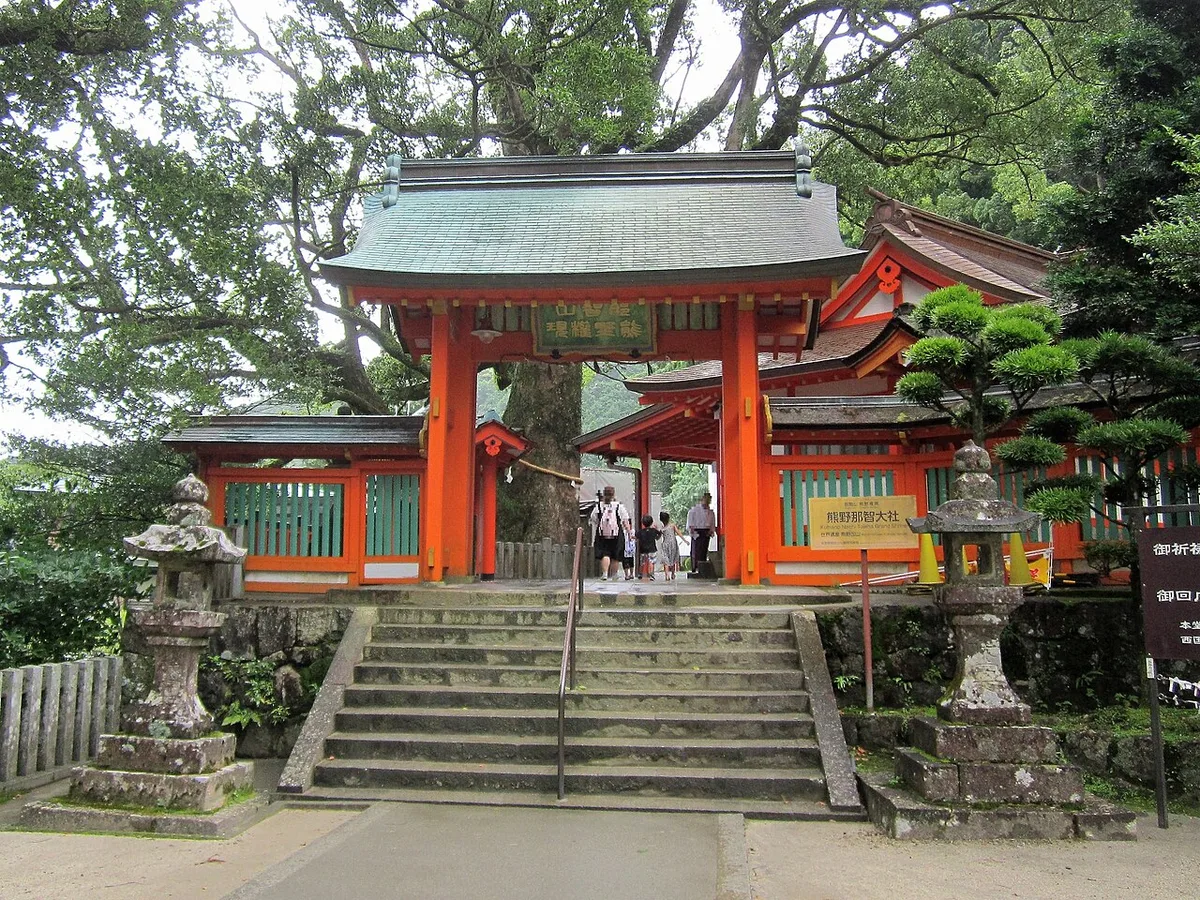
Kumano Hayatama Taisha (熊野速玉大社) in Shingu and Kumano Nachi Taisha (熊野那智大社) complete the Kumano Sanzan.[14],[15] On foot, Nachi is the end of the longer treks that continue from Hongu.[3] If you only have a day from Osaka or Kyoto, the Kumano Kodo day trip covers the short Daimonzaka walk up to Nachi.

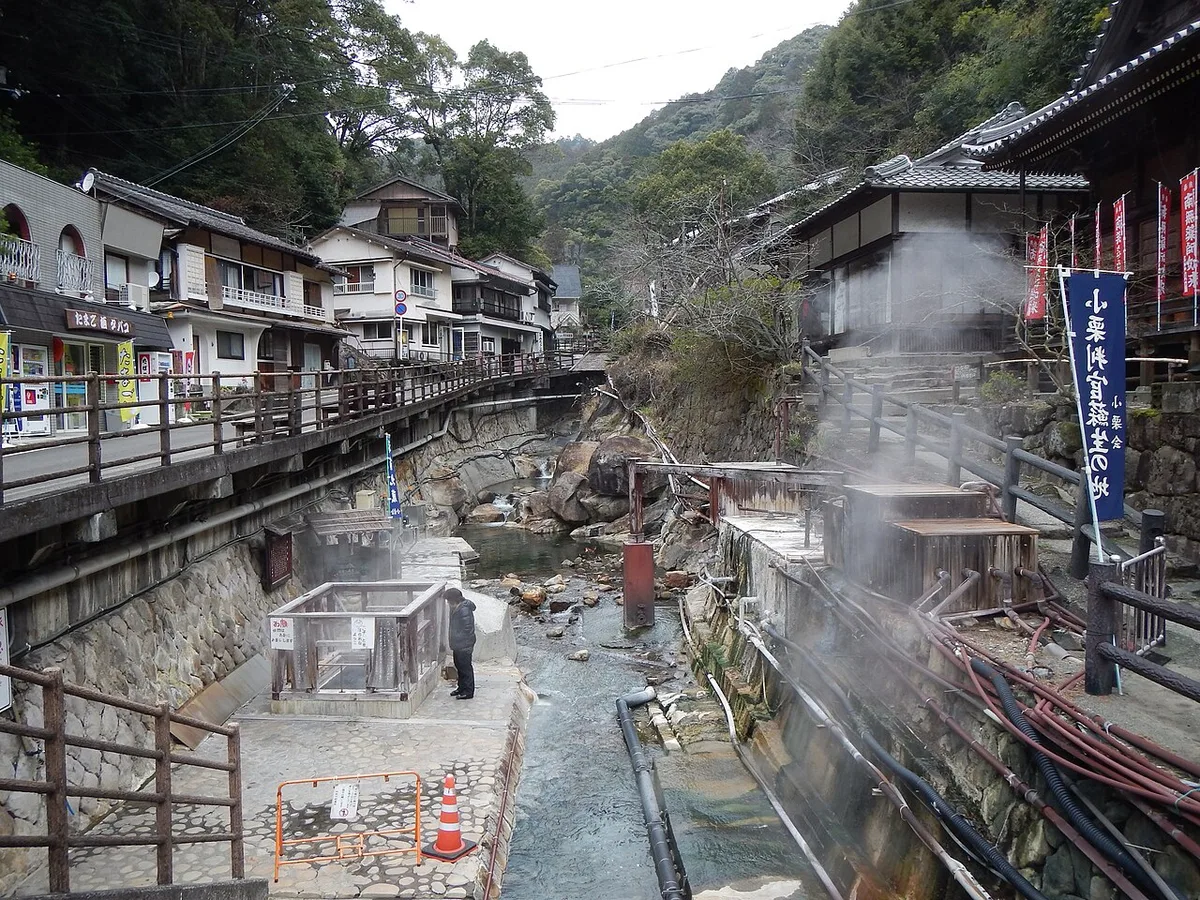
Yunomine Onsen and the Hongu-area baths
The bureau’s 2-day plan ends with a night in the Hongu area, at Hongu village or the onsen villages of Yunomine, Kawayu or Wataze.[3] Before your first bath there, read the onsen rules and the tattoo question.

Where do I stay, and how do I book?
You sleep in the villages along the route, in the Chikatsuyu area and then the Hongu area on the 2-day plan.[3] Book through KUMANO TRAVEL, the booking division of the Tanabe City Kumano Tourism Bureau.[6],[7] What to expect inside the inns (dinner, futon, shared baths) is covered in the ryokan guide.
Dinner at the inns is usually around 18:00, so plan to arrive by 17:00 to bathe first.[10]
How far ahead should I book Chikatsuyu and Hongu?
For spring and fall, book about 6 months ahead and keep alternative dates and inns in mind.[12] The small settlements on the route, Takahara, Chikatsuyu/Nonaka and Koguchi, have few rooms and fill up quickly in those peak periods.[12]
If Chikatsuyu is full, the bureau’s fix is to stay where there are more rooms and use the bus to reach the trail.[12] In practice that means sleeping in Tanabe or the Hongu area and riding the Kii-Tanabe to Hongu bus line to and from the trail (bus times below).[11]
How does luggage transfer work?
The daily luggage shuttle carries your bags from inn to inn while you walk with a day pack. It runs between accommodations booked through KUMANO TRAVEL, and plans also cover pickup from the Kii-Tanabe Station area or Takijiri to your first night’s inn. You must book it at least 20 days in advance. It cannot be added on arrival in Tanabe.[6],[7]
Prices are set per provider and per stage, and each plan is shown on KUMANO TRAVEL with a “from” price. For example, Ryujin Bus plans from a Tanabe inn start from 4,000 yen to Takijiri-oji/Takahara, from 4,500 yen to Chikatsuyu/Nonaka and from 5,500 yen to the Hongu area.[13] Check the plan page for your exact stage and number of bags before you book.
If you only need to leave a bag, the TANABE Tourist Information Center next to JR Kii-Tanabe Station stores luggage between 9:00 and 18:00 for 500 yen per bag, per day.[6]
How do I get there from Osaka or Kyoto?
Take the JR West limited express Kuroshio to Kii-Tanabe: about 1hr 45min from Tennoji, 2 hrs from Shin-Osaka and 2 hrs 35min from Kyoto.[8] Not all Kuroshio trains run to or from Kyoto, so you may need to change at Shin-Osaka; the Kyoto to Osaka routes explain that leg.
From Kii-Tanabe, local buses run to Takijiri-oji and on to Kumano Hongu Taisha.[3] JR West’s Kansai WIDE Area Pass includes reserved seats on the Kuroshio, but the local buses are not JR buses.[16],[9] Whether the pass pays off for this trip is worked out in the Kansai WIDE Area Pass review.
When does the bus to Takijiri-oji leave, and what does it cost?
Ryujin Bus and Meiko Bus share the route from Kii-Tanabe Station, bus stop No.2. The timetable dated Sep. 19th. 2026 lists these departures from Kii-Tanabe Station via Takijiri: 6:16, 6:38, 8:30, 8:37, 10:25, 10:30, 11:35, 13:00, 14:50, 16:40, 17:37, 18:42 and 19:46.[11]
| From Kii-Tanabe Station to | Adult fare, one way |
|---|---|
| Takijiri | ¥970 |
| Hongu Taisha | ¥2,100 |
Fares: [11] The first bus leaves at 6:16 and the last at 19:46.[11] The bureau’s 2-day plan starts with this line (timetable #1).[3]
For Day 1 on the 2-day plan, a morning bus leaves you the full 6~8 hrs the bureau gives for Takijiri-oji to Chikatsuyu-oji.[4] Check the bureau’s bus page for the current timetable before you travel. Buses can be crowded or full in peak spring and fall.[10]
What if it rains, a typhoon comes, or the days are short?
The Kii Peninsula is one of the wettest areas in Japan. Heavy rain and typhoons can cause flash floods and landslides, and the bureau advises not walking in extreme weather. JR trains to Kii-Tanabe also sometimes stop or run late in a typhoon.[10] Landslides and bad weather occasionally close sections of trail and road; the bureau’s Detours and Closures list on its Tips & Safety page shows the current ones.[10]
In late fall, winter and early spring, dark comes early, and earlier still in the valleys where the villages are. Carry a light, and in winter a warm hat, gloves and layers.[10] Leave early so that you arrive between 15:00 to 17:00.[10] On the long Day 2 in winter, that may mean shortening the day by bus rather than walking all of it.[5] For daylight by month, winter buses and New Year closures, read the Kumano Kodo in winter.
What should I carry?
Your bags can travel by shuttle, so you walk with a day pack.[6],[7] The bureau’s gear list:[10]
Day pack
- Day pack with a rain cover
- Rainwear (a folding umbrella helps)
- Enough water, more in the hot months
- Headlamp or flashlight
- First-aid kit with blister care
- Paper map
- Sun protection and insect repellent
- Phone and battery charger
- Collapsible walking poles
Do not plan to drink from streams: the bureau says natural water sources on the trail are untested. Fill your bottles at the inn before you leave and buy drinks from the small shops and vending machines in the villages. For lunch, many inns offer a bento lunch box; ask when you book.[10]
Tips
Frequently asked questions
Is the trail signposted in English?
Yes. The bureau says English signs and maps are in place on the Nakahechi.[1]
Can I walk the Kumano Kodo in winter or summer?
The route is open year-round. Spring and fall are the popular seasons; summers are often hot, humid and wet, and snow rarely falls at the higher elevations.[10]
Does the Japan Rail Pass cover the buses?
The Kumano Tourism Bureau notes that JR buses do not serve the local bus routes, so check the bus operator’s fares before you go.[16],[9] Whether the nationwide pass pays off for your whole trip is covered in the Japan Rail Pass review.
Where can I leave luggage at Kii-Tanabe?
At the TANABE Tourist Information Center next to the station, without a reservation.[6]
Will the buses be full?
They can be crowded or full during the peak spring and fall seasons.[10]
Sources
- Nakahechi (Tanabe City Kumano Tourism Bureau) (checked )
- Difficulty Rating (Tanabe City Kumano Tourism Bureau) (checked )
- Suggested Walks (Tanabe City Kumano Tourism Bureau) (checked )
- Takijiri-oji to Chikatsuyu-oji (Tanabe City Kumano Tourism Bureau) (checked )
- Chikatsuyu-oji to Kumano Hongu Taisha (Tanabe City Kumano Tourism Bureau) (checked )
- Luggage Shuttle & Storage (Tanabe City Kumano Tourism Bureau) (checked )
- About KUMANO TRAVEL (checked )
- Train (Tanabe City Kumano Tourism Bureau) (checked )
- Bus (Tanabe City Kumano Tourism Bureau) (checked )
- Kumano Kodo Tips & Safety (Tanabe City Kumano Tourism Bureau) (checked )
- Kii-Tanabe Station, Shirahama to Kumano Hongu Taisha bus timetable (Tanabe City Kumano Tourism Bureau) (checked )
- KUMANO KODO Planning (Tanabe City Kumano Tourism Bureau) (checked )
- Ryujin Bus Luggage Shuttle (KUMANO TRAVEL) (checked )
- World Heritage (Tanabe City Kumano Tourism Bureau) (checked )
- Kumano Hongu Taisha (Tanabe City Kumano Tourism Bureau) (checked )
- Kansai WIDE Area Pass (West Japan Railway Company) (checked )