
Is Miyajima Worth It? Time, Costs and the 100 cm Tide (2026)
Most visitors spend 2–3 hours on Miyajima. Shrine ¥300, ropeway ¥2,000 return, ¥100 visitor tax, and you can walk to the torii below 100 cm of tide.
Every figure is checked against the sources listed below. See sources
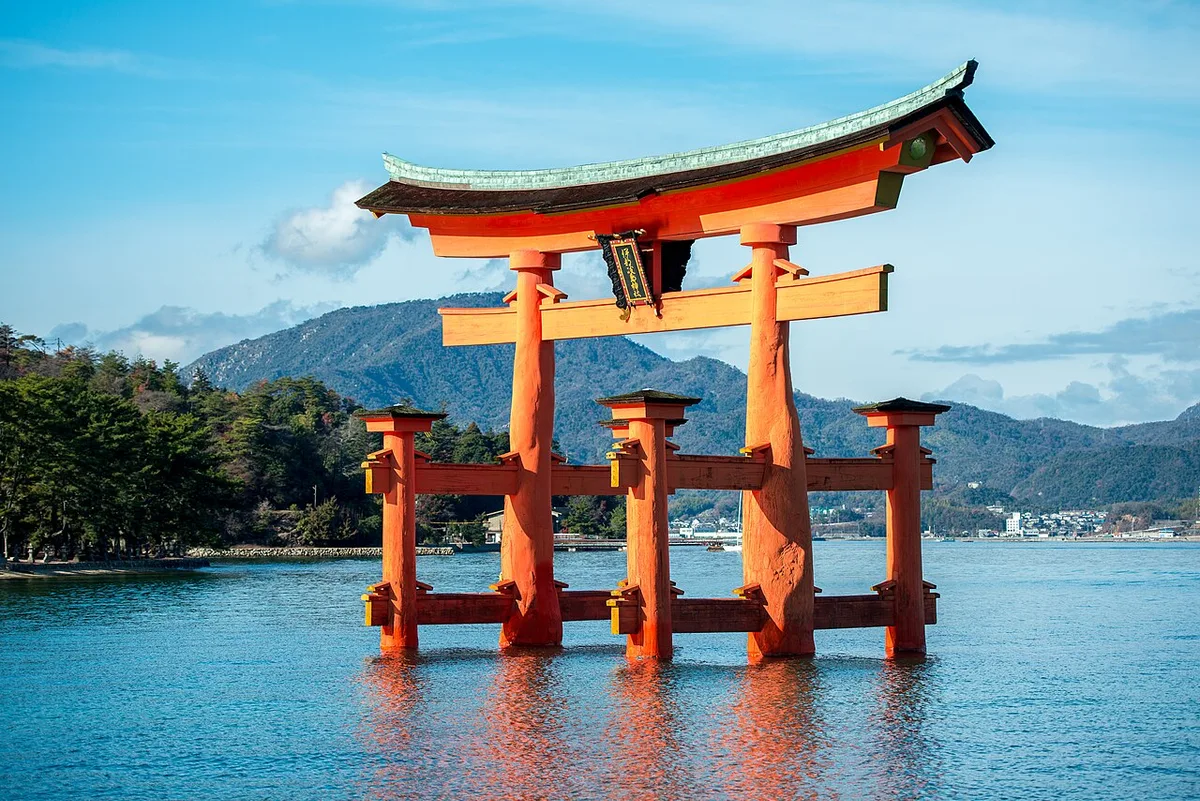

Miyajima (宮島) is worth it for almost everyone who reaches Hiroshima: an island where Itsukushima Shrine (嚴島神社) stands over the sea, with the Otorii gate in the water in front of it and Mt. Misen (弥山) behind. The Miyajima Tourist Association says most visitors spend 2–3 hours on the island.[6] Add half a day if you want the summit of Mt. Misen. Skip it only if you have under three hours in the area and no interest in the shrine; the island is a ferry ride away, and the visit should not be rushed.
Key facts
- Worth it for: first-time visitors to Hiroshima, and anyone who wants the floating shrine, the torii and a mountain view in one day.
- Time needed: most visitors spend 2–3 hours; Mt. Misen adds about 1 hour by ropeway plus about 1 hour to the summit and back.[6][15]
- Shrine fee: ¥300 for adults.[1]
- Visitor tax: ¥100 per person per visit, charged with your ferry ticket.[16]
- Ropeway: ¥2,000 round trip for adults; the last ride down is at 16:30.[15][15]
- Tide: you can walk to the torii when the tide is below 100 cm; the shrine looks afloat above 250 cm.[3][3]
- Getting there: ferry from Miyajimaguchi, 10 minutes.[13]
How long do I need on Miyajima?
Plan around two times: the ropeway’s last ride down and the shrine’s closing time. The ropeway operates from 9:00 to 16:00, and the last ride down is at 16:30.[15] Until October 14 the shrine closes at 18:00; from October 15 to November 30 it closes at 17:30.[1]
| Plan | What it covers | Time | What limits it |
|---|---|---|---|
| Shrine and town | Itsukushima Shrine, the torii from the shore, Daisho-in, Senjokaku | 2–3 hours, as most visitors do[6] | Shrine closing time |
| Add Mt. Misen by ropeway | The ropeway, then the walk to the summit | About 1 hour for the ropeway and its viewpoints, about 1 more hour to the summit and back[15] | Last ride down at 16:30[15] |
| Climb Mt. Misen on foot | One of three trails from the town | About 1 hour 30 minutes to 2 hours 30 minutes on the trail, depending on the route[10] | Daylight and your legs |
| Stay overnight | All of the above, plus the evening illumination | One night | The last ferry back to the mainland |
For most first visits, a full day works best: the shrine in the morning, Mt. Misen at midday, and the torii again in the late afternoon. Start your ropeway ride no later than the early afternoon so that the summit walk fits before the last ride down.
What is there to see?
Itsukushima Shrine — is the fee worth it?
Yes. From the shore you see the outside; for the fee you walk the long vermilion corridors built over the water. Admission is ¥300 for adults, ¥200 for high school students and ¥100 for junior high and elementary school students.[1]
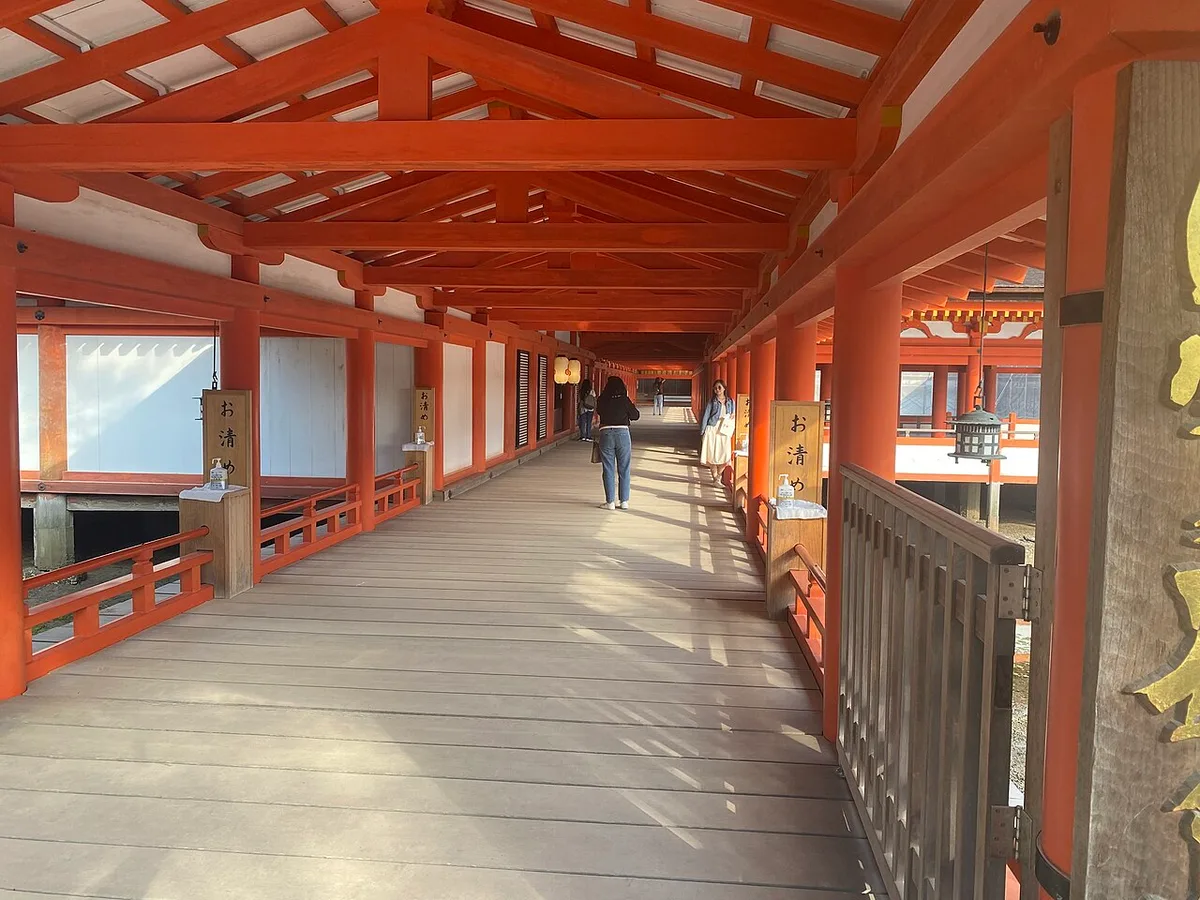

The shrine is open every day. From March 1 to October 14 it is open 6:30–18:00; from October 15 to November 30 and from January 4 to the end of February it closes at 17:30, and from December 1 to December 31 at 17:00. New Year differs: on January 1 it is open from 0:00 to 18:30, and on January 2 and 3 from 6:30 to 18:30.[1]
Senjokaku and the Five-storied Pagoda
Senjokaku (千畳閣), the large hall next to the Five-storied Pagoda, is a cheap stop: it is open 8:30–16:30 and costs ¥100 for adults and ¥50 for junior high and elementary school students.[1]
The Five-storied Pagoda next to it is under restoration. Itsukushima Shrine lists the work from January 20, 2025, scheduled to end on November 20, 2027, and the tourist association says the pagoda cannot be seen at present.[2],[7] Do not plan your visit around it.
When does the torii float, and when can you walk to it?
It depends on the tide level, not on “high tide” or “low tide”. The Miyajima Tourist Association says you can walk out to the Otorii (大鳥居) when the tide is below 100 cm, and that low tide alone does not guarantee it.[3] The shrine appears to float on the sea when the tide is above 250 cm, and high tide alone does not guarantee that either.[3]
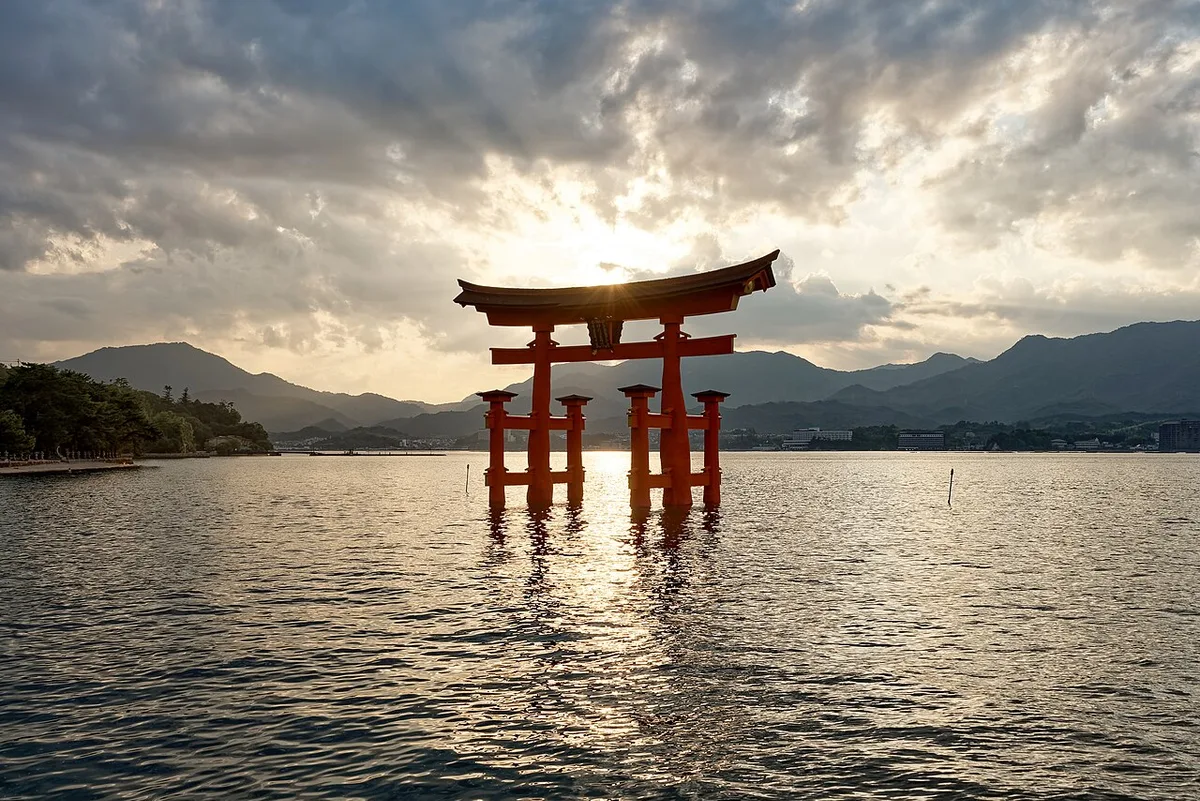

The torii stands in the sea about 160 m from the shrine buildings and is 16.6 m tall, so it is easy to see from the shore at any tide.[4] To time your visit:
Open the association's tide table for your date
The Miyajima Tourist Association publishes a tide table for every month on its website.
Allow for the port
The table is for Hiroshima Port. The association expects the tide at Itsukushima Port to come slightly earlier, so arrive a little before the time you found.[3]
Check the opening hours
Make sure the time you want is within the shrine’s opening hours if you want to go inside.[1]
If the times do not fit a day trip, the evening is your second chance to see the torii. The Otorii, the shrine buildings, the Five-storied Pagoda and the Tahoto are lit every day from 30 minutes after sunset until 23:00, except on occasional days of shrine events. You cannot enter the shrine during the illumination, so see the inside in the daytime.[5],[6]
Is Mt. Misen worth the ropeway?
Yes, if the weather is clear and you have at least half a day. The Miyajima Ropeway costs ¥2,000 round trip or ¥1,100 one way for adults (12 and over), and ¥1,000 or ¥550 for children from 6 to under 12.[15] The ropeway company puts a round trip with sightseeing at about 1 hour, and the summit of Mt. Misen at about 1 more hour there and back.[15]
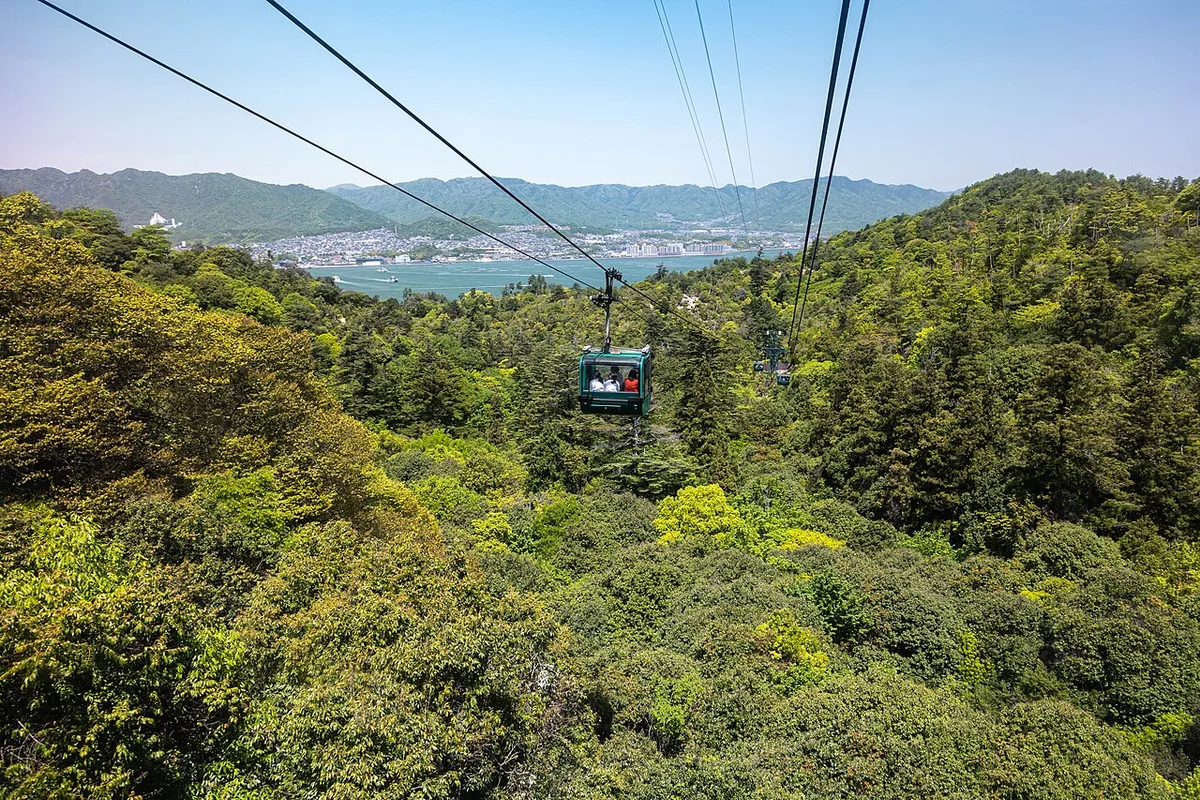

The ropeway does not reach the summit. From Shishiiwa Station (獅子岩駅), the top of the ropeway, the summit of Mt. Misen (535 m) is about a 30-minute walk.[11] Wear shoes you can walk uphill in.
Check the date before you go. On specific busy days the ropeway requires an advance web reservation, which opens 3 months ahead. As listed on October 21, 2026, the remaining days are November 1, 7, 8, 14, 15, 21, 22, 23, 28 and 29, and no days are listed for December.[14] The list changes, so look at the ropeway’s own website again before your trip.
Can I walk up instead?
Yes. The Miyajima Tourist Association asks hikers to use its three routes up Mt. Misen. The Daisho-in and Momijidani courses take about 1 hour 30 minutes to 2 hours, and the Omoto course about 2 hours to 2 hours 30 minutes, breaks included.[10] A common plan is to walk up and ride the ropeway down; the last ride down is at 16:30.[15]
Daisho-in and Momijidani: worth the detour?
Daisho-in (大聖院), a head temple of the Omuro school of Shingon Buddhism, is said to have been founded in 806 by Kobo Daishi.[9] It is part of the tourist association’s 3-hour model course, which walks from the pier to Itsukushima Shrine, Daisho-in, the Five-storied Pagoda and Senjokaku.[6] It is also the start of one of the three hiking trails.
Momijidani Park (紅葉谷公園) is the island’s maple valley. It has about 700 maple trees, and the tourist association gives around November 20 as the usual peak of the autumn colors.[8],[6] If your trip falls in November, the autumn leaves guide covers when colors usually peak elsewhere in Japan.
How much does a visit cost and when is it open?
Places
Itsukushima Shrine
- Hours
- 6:30–18:00 from March 1 to October 14; closes 17:30 from October 15 to November 30 and from January 4 to the end of February, 17:00 in December. Open every day
- Fee
- ¥300Adults ¥300, high school students ¥200, junior high and elementary school students ¥100
- Nearest Station
- Miyajima Pier (ferry from Miyajimaguchi)
For one adult on a day trip, the costs on the island add up from these items. Each operator prints whether the ¥100 visitor tax is in its fare.
| Item | Adult price | Visitor tax included? |
|---|---|---|
| Miyajima Visitor Tax | ¥100 per visit, or ¥500 for a full year paid at once[16] | — |
| Ferry, Miyajima Matsudai Kisen | ¥200 one way, ¥400 round trip[18] | No, the ¥100 is charged on top on the way to the island[18] |
| Ferry, JR West Miyajima Ferry | Covered by the Japan Rail Pass and the JR-WEST Rail Pass[17] | No, the ¥100 is charged separately[17] |
| Itsukushima Shrine | ¥300[1] | — |
| Senjokaku | ¥100[1] | — |
| Miyajima Ropeway | ¥2,000 round trip, ¥1,100 one way[15] | — |
The tax is charged on the trip to the island, on top of the fare.[18] Preschool children, students on school trips with an exemption certificate and holders of disability certificates are exempt; residents of Miyajima and people who work or study there are outside the tax.[16]
How do I get there?
By ferry from Miyajimaguchi (宮島口) on the mainland. Two companies, JR West Miyajima Ferry and Miyajima Matsudai Kisen, run the crossing, and it takes 10 minutes.[13] JR West Miyajima Ferry accepts the Japan Rail Pass and the JR-WEST Rail Pass, but you still pay the ¥100 visitor tax.[17] If you hold a pass, the Japan Rail Pass review explains which trains and ferries it covers.
How to reach Miyajimaguchi from Hiroshima Station or the Peace Park, and which ferry to take, is a separate question with its own fares and timetables: the Hiroshima to Miyajima route guide compares the train, the streetcar and the direct boat.
Day trip or overnight?
A day trip covers the shrine, the torii and Mt. Misen if you start in the morning. Stay overnight if you want the illumination, which runs from 30 minutes after sunset until 23:00, or if the tide times you want fall in the early morning or evening.[5],[6] A night on the island also lets you see the shrine at its 6:30 opening time.[1] Where to stay in Hiroshima or on Miyajima compares a night on the island with a base in the city.
If you choose a traditional inn for that night, the ryokan guide explains how meals, baths and check-in work.
What are the rules about the deer?
Do not feed them. The Miyajima Tourist Association asks visitors not to feed the deer and to take their rubbish home, because deer that swallow plastic or paper can die of it.[12] Keep maps and snacks in your bag, and do not hand the deer paper even if they come close. Okunoshima, the rabbit island, has different rules for its animals: the Okunoshima guide explains them.
Tips
The second mistake is reaching the ropeway in the late afternoon. The ropeway’s hours end at 16:00 and the last ride down is at 16:30, so plan Mt. Misen before the shrine if your afternoon is short.[15]
Frequently asked questions
Is Miyajima wheelchair or stroller friendly?
Partly. Itsukushima Shrine is barrier-free, and the Miyajima tourist information center lends wheelchairs free of charge from 9:00 to 17:30, on the day only, without reservations.[6]
Is the visitor tax paid separately?
Can I visit Miyajima at night?
Do I need to book the ropeway?
Only on the ropeway’s specific busy days, when an advance web reservation is required; as listed on October 21, 2026, the remaining days are November 1, 7, 8, 14, 15, 21, 22, 23, 28 and 29.[14]
Sources
- 拝観施設及び料金 (Itsukushima Shrine, admission facilities and fees) (checked )
- 工事状況及び計画 (Itsukushima Shrine, works in progress and planned) (checked )
- 年間潮汐・潮見表 (Miyajima Tourist Association, annual tide tables) (checked )
- 大鳥居 (Miyajima Tourist Association, the Otorii) (checked )
- ライトアップ (Miyajima Tourist Association, illumination) (checked )
- FAQ (Miyajima Tourist Association) (checked )
- 千畳閣&五重塔&多宝塔 (Miyajima Tourist Association) (checked )
- 紅葉谷公園 (Miyajima Tourist Association, Momijidani Park) (checked )
- 大聖院 (Miyajima Tourist Association, Daisho-in) (checked )
- 歩いて登山 3ルート (Miyajima Tourist Association, three hiking routes) (checked )
- ロープウェイを利用しての登山 (Miyajima Tourist Association) (checked )
- しか・たぬき (Miyajima Tourist Association, deer and raccoon dogs) (checked )
- アクセス (Miyajima Tourist Association, access) (checked )
- 宮島ロープウエー (Miyajima Ropeway, home) (checked )
- 営業時間・運賃・設備 (Miyajima Ropeway, hours, fares and facilities) (checked )
- 宮島訪問税の概要 (Hatsukaichi City, Miyajima Visitor Tax) (checked )
- Fare (West Japan Railway Miyajima Ferry) (checked )
- 運賃 (Miyajima Matsudai Kisen, fares) (checked )