
Tokyo to Kyoto by Shinkansen: fares, trains and booking
Nozomi, Hikari or Kodama from Tokyo to Kyoto: JR Central fares by season, travel times, booking via smartEX or station, and the oversized-baggage rule.
Every figure is checked against the sources listed below. See sources
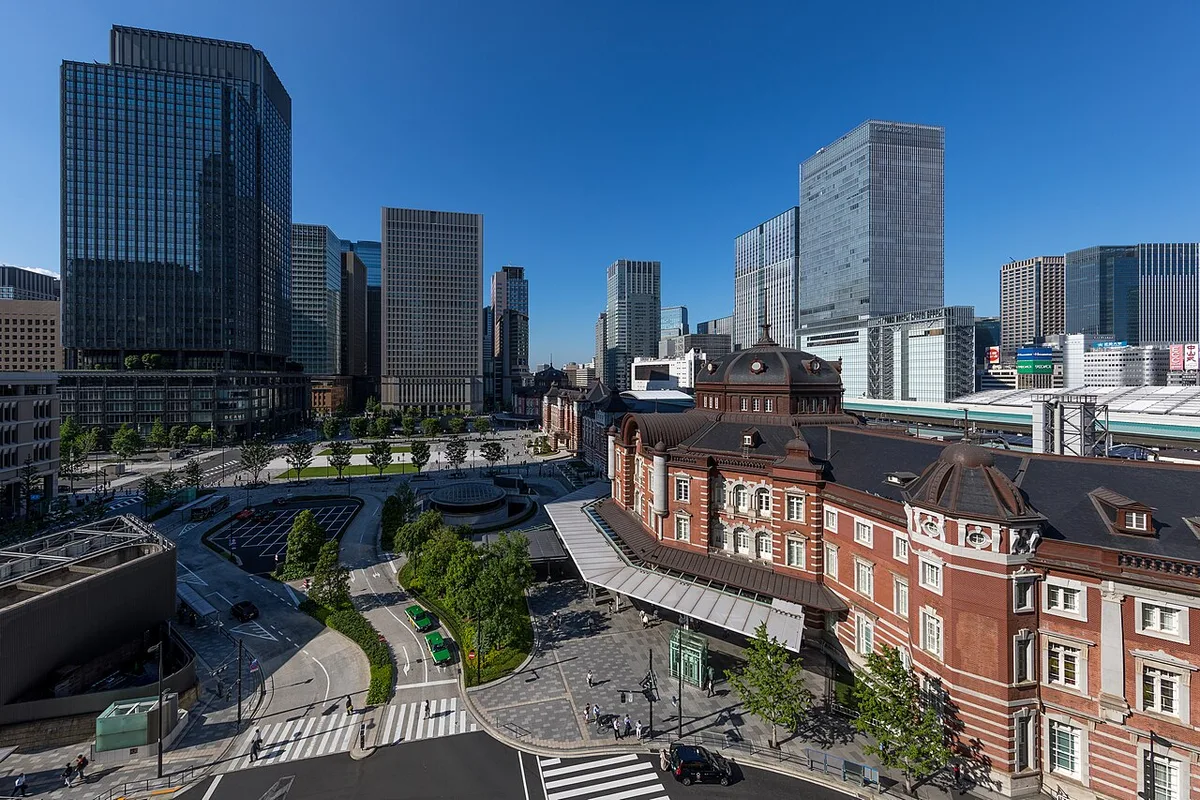

Take a Nozomi (のぞみ) with a reserved seat booked on smartEX: it is the fastest train from Tokyo Station (東京駅), and booking online costs you the regular-season fare of ¥13,970 with no ticket to collect.[1] Take a Hikari (ひかり) instead if you travel on a Japan Rail Pass, which does not cover Nozomi, and only consider a Kodama (こだま) if you want a cheaper early-bird fare or need to get off at a small station on the way.
Key facts
- Fastest: Nozomi, Tokyo to Kyoto in about 130 minutes by JR Central’s own figure, ¥13,970 for a reserved ordinary seat in the regular season.[15][1]
- Cheapest with a seat guarantee: a reserved seat on Hikari or Kodama at ¥13,650; a non-reserved seat on either costs ¥13,320 but is not guaranteed.[2],[1],[24]
- Cheapest if you can commit early: EX Hayatoku 21 on Nozomi at ¥12,430 per adult, booked at least 21 days ahead on smartEX, limited seats, no changes.[9],[10]
- Luggage: a suitcase measuring 161 to 250 cm (length + width + height) needs a seat with an oversized baggage area reserved in advance, free; without the reservation JR Central charges ¥1,000 on board.[11]
All fares on this page are JR Central’s smartEX service prices from its tables dated April 1, 2025, for one adult in an ordinary car in the regular season; walk-up tickets at the station are priced separately and are not quoted here.[1] Add ¥200 in the peak season and ¥400 in the highest-peak season, or subtract ¥200 in the off-peak season; non-reserved seats cost the same all year.[1],[3],[23],[24]
Nozomi, Hikari or Kodama: which train?
| Item | Nozomi | Hikari | Kodama | Hikari on a JR Pass |
|---|---|---|---|---|
| Reserved seat | ¥13,970 | ¥13,650 | ¥13,650 | Included in the pass |
| Non-reserved seat | ¥13,320 (none in peak periods) | ¥13,320 | ¥13,320 | Included in the pass |
| Japan Rail Pass | Only with a ¥4,960 NOZOMI MIZUHO Ticket | Yes | Yes | Yes |
JR Central puts the Shinkansen trip from Tokyo to Kyoto at about 130 minutes, the time of the fastest trains.[15] Hikari and Kodama make more stops on the way and take longer, so check the arrival time of the exact train on smartEX before you choose one.
The fare difference is ¥320: ¥13,970 on Nozomi against ¥13,650 on Hikari or Kodama for a reserved seat, so unless you hold a Japan Rail Pass or want the early-bird fare there is little reason to choose the slower train.[1] Non-reserved seats on either cost ¥13,320 but do not guarantee a seat.[2],[1],[24]
If you can fix your date three weeks out, EX Hayatoku 21 is the one real discount: a Nozomi reserved seat from Tokyo to Kyoto for ¥12,430 per adult at the price table dated March 13, 2026, sold on smartEX from 1 month before travel (10:00) until 21 days before (23:30), with a limited number of seats per train, no changes after booking other than the seat position, and a ¥320 fee per person to cancel.[9],[10] It is priced for people who will not change plans; if your trip has any flexibility in it, pay the regular fare.
How do I book and board, step by step?
Register on smartEX and book the seat10 min
smartEX is JR Central’s own booking service for the Tokaido, Sanyo and Kyushu Shinkansen. There is no annual fee; it takes Visa, Mastercard, American Express and Diners Club cards, the card holder must be 18 or over, bookings open from 5:30 am one year before the boarding date and close 4 minutes before departure, and you can change the train free of charge as often as you like until departure, as long as you have not passed the ticket gate; cancelling before departure costs ¥320, and your card issuer’s foreign transaction fee may apply.[4],[3] Pick the train, then the seat on the seat map.
Reserve a seat with an oversized baggage area if your case is over 160 cm
Measure your suitcase: length plus width plus height. If the total is 161 to 250 cm, select “Seat with Oversized Baggage Area” as the seat type before you search for trains in smartEX; the reservation is free and can cover up to 5 people per booking (4 in the Green Car).[11],[8] If the total is 160 cm or less, any seat will do and the case goes in the rack or at your feet; without the reservation an oversized case costs ¥1,000 on board.[11]
Choose how you will pass the gate: IC card, QR-Ticket or paper
Register one of the ten nationwide IC cards to your account and simply touch it at the Shinkansen gate; the fare is charged to your credit card, not the IC balance, and if you arrive on a JR local line you touch both the conventional-line gate and the Shinkansen transfer gate. Without a registered card, display the QR-Ticket from My Trips at a gate marked “QR” (one code per person, companions get theirs by e-mail), or pick up paper tickets at a machine with the EX logo. In the first two cases take the “Seat Information” slip the gate prints; the conductor may ask for it.[4],[5],[6],[7] If you still need a card, the IC card comparison for visitors says which ones can be registered.
Or buy at the station instead10–20 min
Every JR Central ticket machine has an English menu, and JR ticket offices sell the same tickets; you state the stations, date and time, train type, number of adults and children aged 6 to 11, and reserved or non-reserved.[19] Ask for a seat with an oversized baggage area at the same time if you need one.[11],[8]
Find the Tokaido Shinkansen gates at Tokyo Station10–15 min
The Tokaido Shinkansen gates are on the Yaesu (八重洲) side. From the street use the Nihonbashi, Yaesu North, Yaesu Central-North, Yaesu Central-South or Yaesu South ticket gates; from a JR local-line platform follow the signs to the Shinkansen Central Transfer Gate or Shinkansen South Transfer Gate, where EX pick-up machines stand beside the gates and elevators go up to the platforms.[16] With paper tickets, insert them into the gate on entry and at a transfer gate insert the local-line ticket together with the Shinkansen ticket; the gate keeps them on exit.[20] The platform number is printed on your ticket or Seat Information slip; check the departure board, because the basic timetable does not list every extra train.[14]
Board, stow the case, rideAbout 130 min
Put an oversized case in the space behind the last row of the seats you reserved; smaller cases go overhead or at your feet. On N700S trains every seat has a power outlet, on N700A trains only window seats and the end rows in ordinary cars do, and every car is non-smoking.[21]
Leave Kyoto Station by the right exit5–10 min
For the Kintetsu Line, the Hachijo-side hotels or the Hachijo bus stops, take the Shinkansen Central, Hachijo or Hachijo East Ticket Gate straight out to the south side. For the city buses, the Karasuma (烏丸) subway line, the JR Nara and Sagano lines, the Kyoto Tourist Information Center, baggage storage and coin lockers, use the Shinkansen Central Transfer Gate or Shinkansen East Transfer Gate into the JR West station and walk through to the north side.[16] The JR West ticket office there is open 6:30 to 21:00, and the Central, West and Underground East exits stay open from 4:35 until the last train, while the Hachijo East exit closes at 23:00.[25]
If your next stop after Kyoto is Osaka, the Kyoto to Osaka routes by JR, Hankyu, Keihan and Shinkansen compares them.
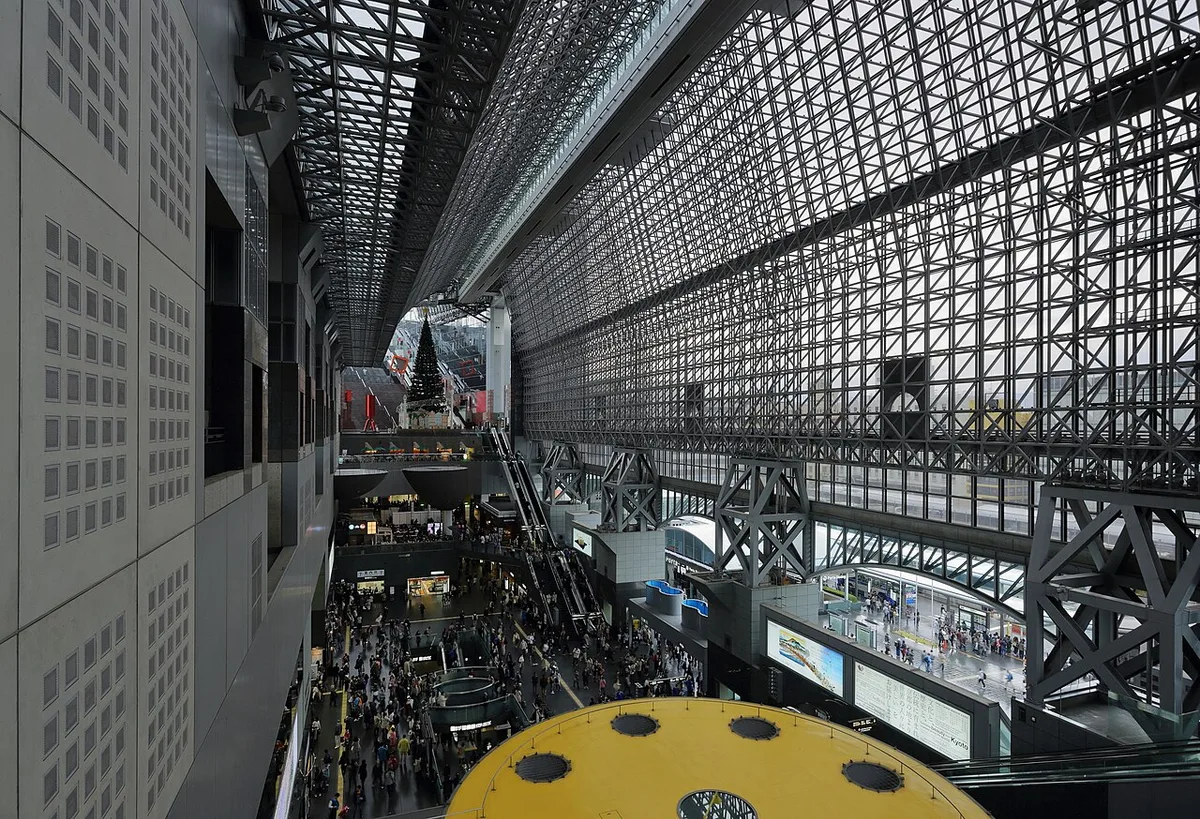

Which pass covers this?
The Japan Rail Pass covers Hikari and Kodama in full, including free seat reservations, but not Nozomi: to ride a Nozomi with the pass you buy an [ONLY WITH JAPAN RAIL PASS] NOZOMI MIZUHO Ticket for ¥4,960 at a reserved-seat ticket machine or JR ticket office in Japan, and JR Central says it cannot be reserved online before you arrive.[22] At ¥50,000 for 7 days, the pass is about twice what a Tokyo–Kyoto round trip on Hikari costs, so it only makes sense if you continue beyond Kyoto; whether the JR Pass pays off for your route does the arithmetic.
An IC card on its own does not pay for the Shinkansen. Tapping a Suica or ICOCA at the Shinkansen gate works only when the card is registered to a smartEX booking, and the fare is then taken from your credit card.[4],[5],[6],[7] Pass holders who want an oversized baggage area reserve it on the JAPAN RAIL PASS Reservation site or at a ticket office, just as smartEX users do in the app.[11],[8]
Frequently asked questions
What exactly counts as oversized baggage, and what happens if I did not reserve?
JR Central measures length plus width plus height. Up to 160 cm goes in the racks, footwell or deck storage with no reservation; 161 to 250 cm is oversized and must travel behind a seat with an oversized baggage area, reserved in advance at no extra charge; over 250 cm cannot be taken on board at all. If you carry an oversized case without the reservation, you pay a ¥1,000 baggage fee on board. Some trains also have an oversized baggage compartment on the deck that can be used without a reservation on a trial basis, but do not count on it.[11] The general limit is two items per person, each within 250 cm and 30 kg.[18]
Can I take a stroller or a wheelchair?
Strollers, musical instruments and sports equipment of any size up to 250 cm may be carried without a reservation and placed in the racks or deck storage, though a stroller fits best in an oversized baggage area if you reserve one.[11] Wheelchairs within 120 cm in length and height and 70 cm in width are allowed; wheelchair-accessible seats must be reserved, and JR Central accepts those reservations until two days before boarding, with a multi-purpose room on each train.[21] Both Tokyo and Kyoto Shinkansen platforms have elevators.[16]
How much do children pay?
Children aged 6 to 11 pay half the adult fare for the basic fare, limited express and reserved-seat tickets; a child reserved seat on Nozomi is ¥6,980 and a non-reserved seat ¥6,660 at smartEX prices. Infants aged 1 to 5 and babies under 1 travel free, up to two per fare-paying passenger, unless they occupy a reserved seat, in which case you buy a child ticket.[17]
Can I pay for the Shinkansen with my Suica or ICOCA?
Not from the card balance. The ten nationwide IC cards open the Shinkansen gate only when registered to a smartEX booking, and the fare is charged to the credit card on the account; children’s IC cards cannot be registered, and the IC cards sold to foreign visitors expire 28 days after purchase, after which the gate rejects them.[4],[5],[6],[7]
Should I leave from Tokyo Station or Shinagawa?
smartEX fares for Shinagawa to Kyoto are the same as from Tokyo, so the price does not decide it.[1] Leave from whichever is closer to your hotel, and check on smartEX that your train stops there.
Do I need to reserve a seat at all?
Not legally, but in practice yes on Nozomi: non-reserved seats on it disappear entirely during the peak periods listed above, and a reserved seat costs only ¥650 more than a non-reserved one at smartEX prices (¥13,970 against ¥13,320).[1] On Hikari and Kodama a non-reserved ticket is a reasonable gamble outside holidays.
Sources
- smartEX Service prices — reserved seat in ordinary cars (JR Central) (checked )
- smartEX Service prices — non-reserved seat in ordinary cars (JR Central) (checked )
- smartEX Service (JR Central) (checked )
- smartEX for first-time users (JR Central) (checked )
- smartEX: boarding with an IC card (JR Central) (checked )
- smartEX: boarding with a QR-Ticket (JR Central) (checked )
- smartEX: picking up paper tickets (JR Central) (checked )
- smartEX: reserving a seat with an oversized baggage area (JR Central) (checked )
- EX Hayatoku 21 (JR Central smartEX) (checked )
- EX Hayatoku 21 prices from March 13, 2026 (JR Central smartEX) (checked )
- Oversized baggage (JR Central) (checked )
- Nozomi: all-reserved peak periods (JR Central / JR West) (checked )
- ピーク期間のぞみ全席指定席のご案内(JR東海・JR西日本) (checked )
- Shinkansen timetable page (JR Central) (checked )
- Kyoto by Shinkansen (JR Central) (checked )
- Station layout maps: Tokyo and Kyoto (JR Central) (checked )
- Adults and children (JR Central ticket rules) (checked )
- Personal belongings (JR Central ticket rules) (checked )
- How to buy tickets (JR Central) (checked )
- How to use tickets (JR Central) (checked )
- Accommodations of trains (JR Central) (checked )
- NOZOMI MIZUHO Ticket for JAPAN RAIL PASS holders (JR Central) (checked )
- シーズン別の指定席特急料金(JR東海 きっぷのルール) (checked )
- 特急列車を利用する場合のきっぷの組み合わせ(JR東海 きっぷのルール) (checked )
- 京都駅 駅情報(JR西日本 JRおでかけネット) (checked )
- Central Japan Railway Company (English top page) (checked )