
Hiraizumi Guide: Chusonji, Motsuji and How Long to Stay
Is Hiraizumi worth a stop on the Tohoku Shinkansen? Chusonji and Motsuji hours and fees, the Runrun loop bus, and planning a half or full day from Sendai.
Advertising: this article contains affiliate links. We may earn a commission at no extra cost to you.
Every figure is checked against the sources listed below. See sources
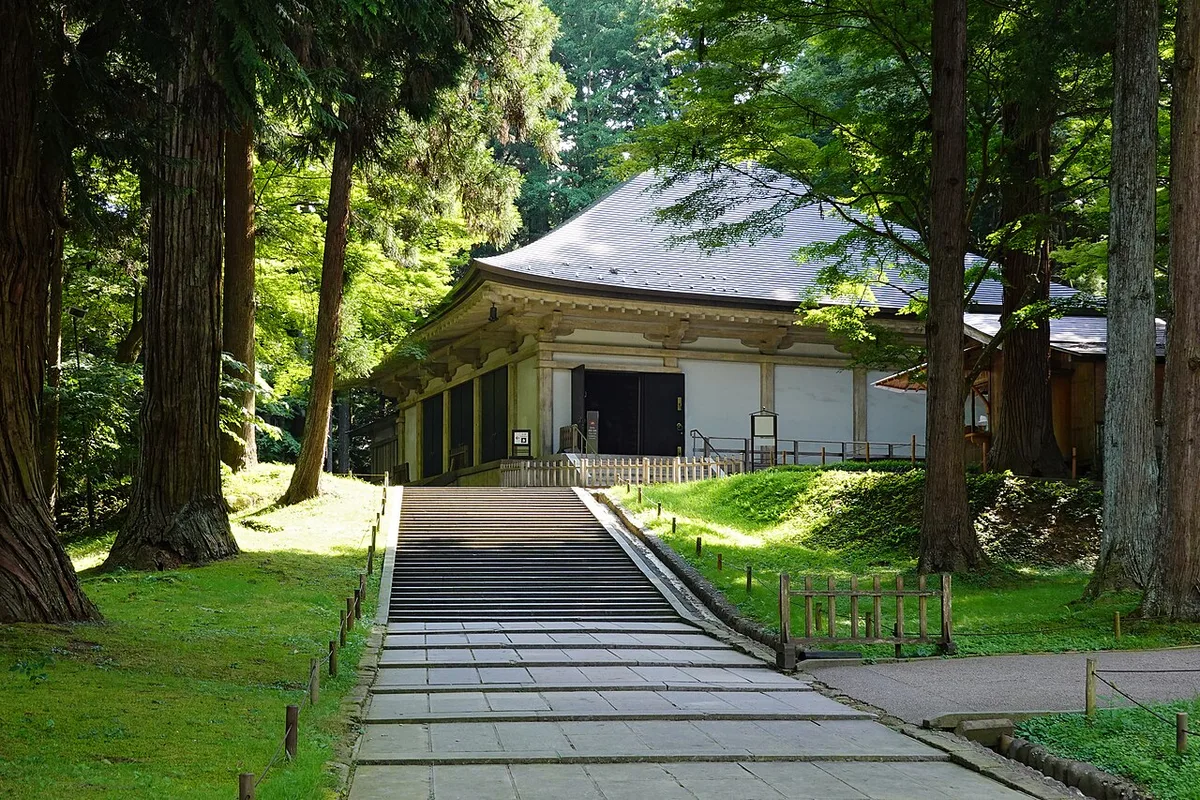

Hiraizumi (平泉) is a small town in southern Iwate Prefecture, a short ride off the Tohoku Shinkansen, with two temples from the age of the Oshu Fujiwara lords. The draw is Chusonji’s Konjikido, completed in 1124 and the only 12th century structure at the temple to survive in its original form.[1] Stop here if you are travelling north from Tokyo or Sendai by rail and enjoy temples and gardens. If temples are not your interest, you can skip it: the town is quiet, and the sights are the two temples and their grounds.
Key facts
- Worth it for: rail travellers heading north through Tohoku who want a 12th-century gilded hall and a Pure Land garden.[1]
- Time needed: half a day for both temples; Chusonji alone usually takes around 1 – 2 hours.[1]
- Chusonji fee: ¥1,000 for adults.[2],[1]
- Motsuji fee: ¥700 for adults.[5],[4]
- Nearest station: JR Hiraizumi (平泉駅), 8 minutes from Ichinoseki (一ノ関) on the Tohoku Main Line.[7],[6]
What is there to see?
Chusonji and the Konjikido — what does the ticket include?
Chusonji (中尊寺) sits on a wooded hill north of the station. You reach it by walking up the Tsukimizaka (月見坂), the main approach, from the bus stop.[1],[8] You pay at the ticket office for the halls.
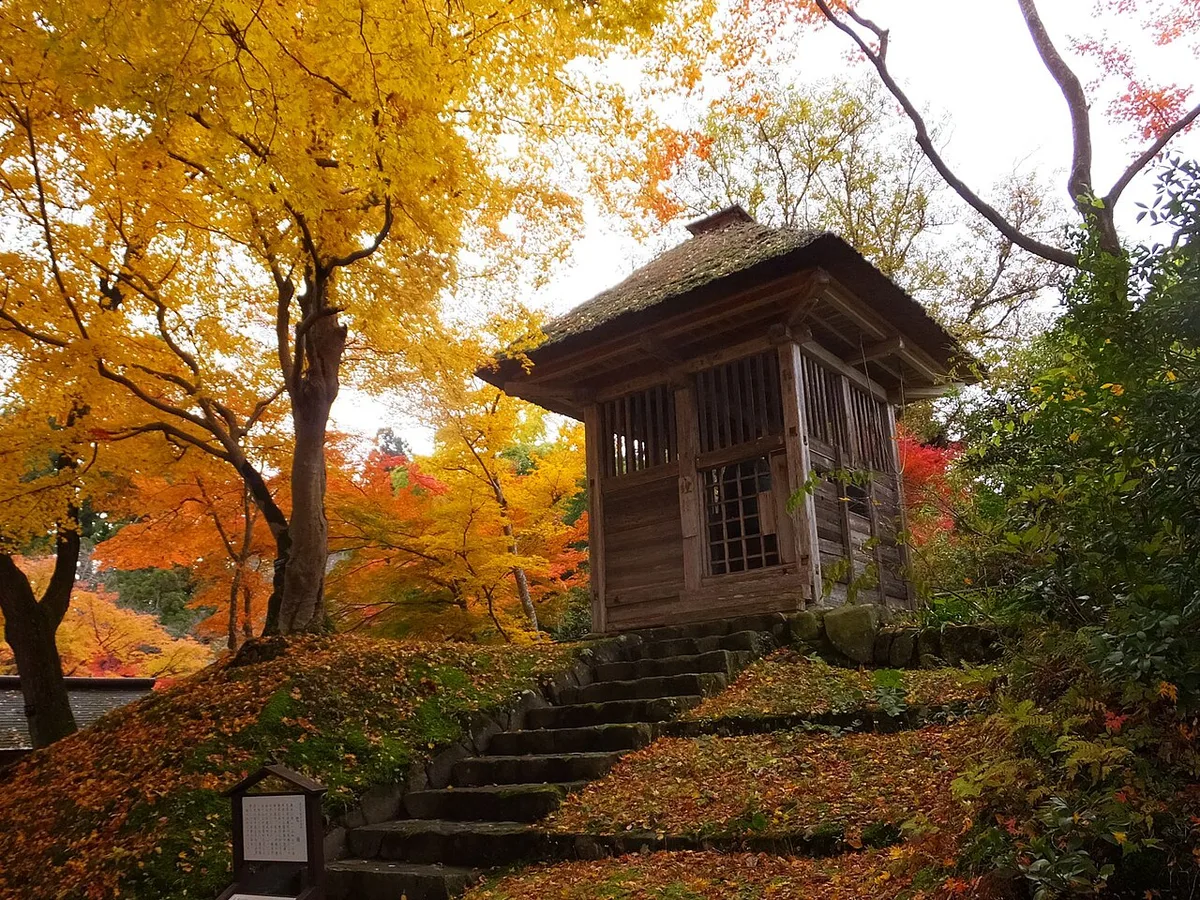

One regular ticket covers the Konjikido (金色堂, the Golden Hall), the Sankozo Museum (讃衡蔵), the Sutra Repository and the Former Konjikido Shelter Hall. It costs ¥1,000 for adults, with lower fees for students.[2],[1] The halls are open 8:30–17:00 from March 1 to November 3 and close at 16:30 from November 4 to the end of February.[2]
Motsuji — is the garden worth the extra fee?
Yes, if you like gardens. Motsuji (毛越寺) is a separate temple with its own ticket, and its Pure Land garden is designated both a special historic site and a special place of scenic beauty.[3] Admission is ¥700 for adults.[5],[4]
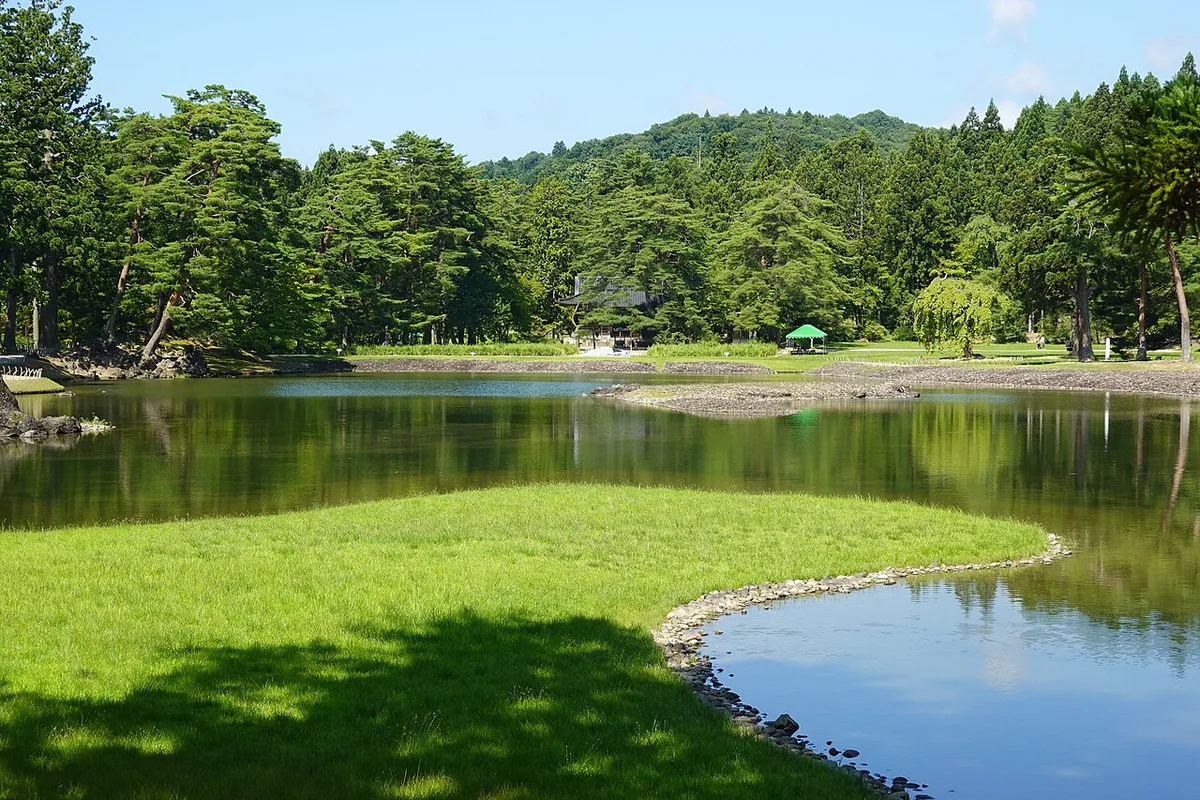

Motsuji opens 8:30–17:00, and closes at 16:30 from November 5 to March 4.[5],[4] It is the closer of the two temples to the station, so it works well as your first or last stop.
How much does it cost and when is it open?
Places
Chusonji
- Hours
- Grounds open all year. Ticketed halls 8:30–17:00 from March 1 to November 3, 8:30–16:30 from November 4 to the end of February; tickets stop 10 minutes before closing
- Fee
- ¥1,000Adults, regular ticket covering the Konjikido, Sankozo Museum, Sutra Repository and Former Konjikido Shelter Hall; high school ¥700, junior high ¥500, elementary ¥300
- Nearest Station
- JR Hiraizumi Station (1.6 km), or the Chusonji stop of the Runrun loop bus
- Time Needed
- Usually around 1–2 hours (temple's own guidance)
Places
Motsuji
- Hours
- 8:30–17:00; 8:30–16:30 from November 5 to March 4
- Fee
- ¥700Adults; high school students ¥400; elementary and junior high school students ¥200
- Nearest Station
- JR Hiraizumi Station, 0.7 km
Both temples sell tickets at their gates. Chusonji charges ¥1,000 and Motsuji ¥700 for adults, so seeing both costs the sum of the two. Winter hours differ by a day: Chusonji switches to its 16:30 closing on November 4,[2] Motsuji on November 5.[5],[4]
How do I get there?
From Tokyo, take the Tohoku Shinkansen to Ichinoseki and change to the local Tohoku Line for Hiraizumi. JNTO gives approximately two hours and 40 minutes for the whole trip.[10] Whether a rail pass pays off depends on how far north you go; the Japan Rail Pass review works through the options.
From Sendai, Ichinoseki is 32 minutes by Shinkansen, and Hiraizumi is 8 minutes further on the JR Tohoku Main Line.[7],[6] That makes Hiraizumi an easy day trip from Sendai, or a half-day stop on the way to Morioka or Aomori.
How do I get around Hiraizumi?
Walking works. The Hiraizumi Tourism Association lists Motsuji as 0.7 km from the station and Chusonji as 1.6 km, with 1.6 km between the two temples.[6],[7]
The Runrun (るんるん) loop bus links the station, Motsuji, Chusonji and the other heritage sites. It costs ¥200 per ride, takes IC cards, and a one-day pass for ¥550 is sold on the bus.[9] Buses leave the station every 30 minutes from 10:15 to 16:15.[9]
Check the day before you rely on it. In 2026 the Runrun runs only on Saturdays, Sundays and national holidays from April 11 to November 29, and daily from August 13 to 16. On other days, the regular Ichinoseki–Hiraizumi route bus stops at some of the same places, at its own fares, and the Runrun day pass is not valid on it.[9]
What if I visit on a weekday?
Use Iwateken Kotsu’s Ichinoseki–Hiraizumi route bus. It runs all year, on weekdays as well as weekends, between Ichinoseki Station, Motsuji, Hiraizumi Station, Chusonji and Sehara.[12],[11]
| Direction | Departures (daytime) | Ride |
|---|---|---|
| Hiraizumi Station → Chusonji | 9:55, 10:40, 11:55, 12:55, 13:55, 14:55, 15:55[11] | 4 minutes[11] |
| Chusonji → Hiraizumi Station → Motsuji | 10:14, 10:59, 12:14, 13:14, 14:14, 15:14, 16:14[11] | 8 minutes to Motsuji[11] |
The bus also starts at Ichinoseki Station, so you can ride it straight to the temples instead of changing to the train. From Ichinoseki Station it costs ¥370 to Hiraizumi Station and ¥410 to Chusonji.[11] Timetables change, so check the operator’s current one for the bus you plan to catch.
Can I rent a bicycle?
Yes, except in winter. Hiraizumi Rent-a-Cycle is next to Hiraizumi Station on its north side. A standard bicycle costs ¥700 for 4 hours or ¥1,300 for a day.[12] Electric bicycles cost ¥900 for 4 hours or ¥1,600 for a day, and each extra hour costs ¥300.[12] The shop is closed on rainy days and in winter.[12] You still climb the Tsukimizaka to Chusonji’s halls on foot.[1],[8]
How do I see both temples in half a day?
This plan works on any day, because it uses the route bus. On Runrun days you can use the loop bus for the same legs instead.[9]
Ride the bus from Chusonji to Motsuji12:14
Catch the 12:14 bus, or the 13:14 if you need longer; it reaches Motsuji 8 minutes later.[11]
To fill the other half of the day, the one-day plan with Geibikei Gorge pairs these temples with the boat ride on the gorge, by train from Ichinoseki.
Where should I stay?
Most visitors do not need to stay: Hiraizumi fits into a day from Sendai or a stop between trains. Stay one night if you want to be at Chusonji when the halls open, or if you are travelling on north the next morning.
For an overnight stop, the area around Ichinoseki Station is the practical base. It is the Shinkansen station, and Hiraizumi is a short local train ride away.[7],[6] If you continue north to Hokkaido, the Hakodate guide covers the next stop on the line.
Tips
Chusonji is the one up the hill and the farther from the station.[6],[7] A simple order is Chusonji first, then back toward the station for Motsuji.
Frequently asked questions
Is Chusonji accessible for wheelchairs or strollers?
The main approach is the Tsukimizaka, a slope you walk up from the bus stop.[1],[8] To avoid most of it, Chusonji points older visitors and those who have trouble walking to the private Sakanoue (Hilltop) Parking Lot, the closest parking, with 30 spaces.[1] That helps if you come by car. The Runrun bus normally uses vehicles with a slope, but the vehicle can change, so wheelchair users should contact Iwateken Kotsu’s Ichinoseki office before riding.[9]
Where can I leave my luggage?
Chusonji has no coin lockers. The temple asks visitors to use the lockers at Hiraizumi Station.[1]
Is Hiraizumi good for autumn leaves?
For when the colors usually peak in Tohoku, see the autumn leaves guide.
Sources
- Chūson-ji Temple (English) (checked )
- 参拝のご案内 (Chusonji, Japanese) (checked )
- Motsuji Temple (English) (checked )
- Admission & Transportation (Motsuji) (checked )
- 拝観・交通 (Motsuji, Japanese) (checked )
- Getting to Hiraizumi (Hiraizumi Tourism Association) (checked )
- アクセス (Hiraizumi Tourism Association, Japanese) (checked )
- Go by Hiraizumi Junkai Bus Runrun (Hiraizumi Tourism Association) (checked )
- 平泉町巡回バス『るんるん』 (Iwateken Kotsu) (checked )
- Hiraizumi (UNESCO) — Travel Japan (JNTO) (checked )
- 一関平泉線 バス時刻表 (Iwateken Kotsu) (checked )
- 町内交通機関のご案内 (Hiraizumi Tourism Association, Japanese) (checked )