
Japan etiquette for visitors: tipping, shoes, trains, trash
The etiquette you will actually meet in Japan: no tipping, shoes off, quiet trains, escalators, carrying your trash, eating on the go, and shrine visits.
Every figure is checked against the sources listed below. See sources

You do not need to learn a rulebook to be a polite visitor in Japan. Most of what you will meet is custom, not law: you do not tip, you take your shoes off where there is a step up at the entrance, you keep your phone silent on trains, and you carry your trash with you. A few local rules are written into prefectural or city ordinances, such as standing still on escalators in Saitama and smoking only in designated areas. You also do not need to bow perfectly.[1]
Key facts
- Tipping: not needed. JNTO says hotels follow international practice except for tipping.[1]
- Shoes: off at the entrance of homes, ryokan and tatami rooms; slippers off on the tatami.[1]
- Trains: phone on silent, no calls, and line up on the platform.[2],[1]
- Trash: public bins are scarce, so bring a bag and take your trash with you.[7]
- Smoking: only in designated areas; smoking while walking is prohibited and may be fined.[1]
Before you go out
- A small bag for your own trash
- Phone set to silent mode
- Shoes that are easy to slip off and on, and socks you do not mind showing
- An IC card or some coins, so paying on trains and at small shops is quick
What do I do, step by step, through a typical day?
The steps below follow the order in which you usually meet each situation on a day out.
At a hotel, restaurant or taxi: do not tip
JNTO says there is no need to tip in Japanese hotels, which otherwise follow the practices you know from elsewhere.[1] Pay the amount on the bill. Traditional inns follow their own code of conduct; the ryokan guide covers what to expect there.
At an entrance with a step up: shoes off
JNTO describes the routine: take your shoes off in the entrance area inside the door, put on the slippers provided, and place your shoes neatly to the side or in the shoe box. Take the slippers off before you step onto tatami mats, and use the separate restroom slippers if there are some.[1]
On escalators: stand still
Saitama Prefecture has made standing still on escalators a legal duty for users, and escalator managers there must remind users of it.[3]
Street food: eat where you bought it
Kamakura City lists eating while walking in narrow or crowded places as a nuisance, because food can soil other people’s clothes. The city says this is not a ban.[4] Eat at the stall or step aside to a bench.
Trash: carry it with you
Visitors find few public trash bins. In the Japan Tourism Agency’s FY2025 visitor survey, too few trash bins was still the most reported difficulty, at 17.2%.[5] That is down from 30.1% in the FY2023 survey.[6] Kyoto City asks you to carry your own trash bag and to buy take-out where the shop has its own bins.[7]
At a shrine: purify, then bow twice, clap twice, bow once
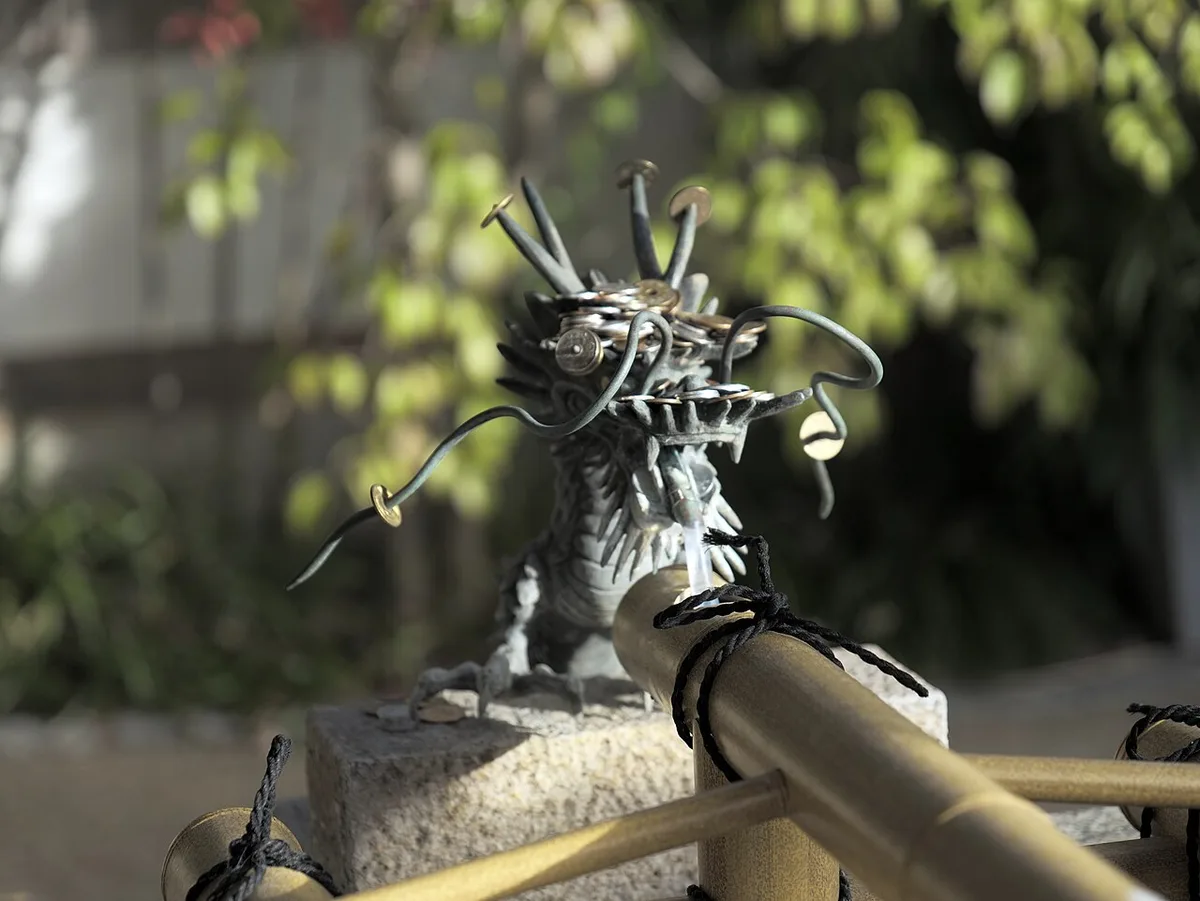
Jinja Honcho, the Association of Shinto Shrines, gives the standard form. At the purification font, use the ladle to rinse your left hand, your right hand and your mouth; do not touch the ladle to your mouth. At the front of the hall, put coins in the offering box if you wish, ring the bell, bow deeply twice, clap twice and bow deeply once.[8]
Which of these are laws, and which are customs?
| Situation | Who sets it | What it is |
|---|---|---|
| Standing still on escalators | Saitama Prefecture ordinance | A duty for users; managers must inform users[3] |
| Smoking on the street | City ordinances, e.g. Kyoto City | Banned outside designated areas; fines apply[7] |
| Eating while walking | Kamakura City ordinance | Listed as a nuisance in crowded places, not banned[4] |
| Photos in Gion | Landowners, posted on site | Prohibited where signs say so[7] |
| Tipping, shoes, phone calls, queues | Custom and operators’ requests | Expected behavior, not written into these ordinances |
Road rules are a different matter: they are law, and driving in Japan covers them.
If you want to watch geiko perform on a booked stage instead, the Kanazawa geiko performance guide compares the scheduled shows and how to book them.
For bathing, see onsen etiquette and tattoos.
Frequently asked questions
Sources
- Understanding and Mastering Japanese Manners and Etiquette (JNTO) (checked )
- Train manners (JR West) (checked )
- Saitama Prefecture ordinance on the safe use of escalators (Saitama Prefecture) (checked )
- Kamakura City ordinance on manners in public places (Kamakura City) (checked )
- FY2025 survey on the reception environment for international visitors (Japan Tourism Agency) (checked )
- FY2023 survey on the reception environment for international visitors (Japan Tourism Agency) (checked )
- Enjoy Respect Kyoto (Kyoto City Official Travel Guide) (checked )
- Entering a Jinja (Jinja Honcho, Association of Shinto Shrines) (checked )