
Which IC Card Should Tourists Get in Japan? (2026 Guide)
On iPhone, Welcome Suica Mobile: no deposit, valid 180 days. Otherwise Welcome Suica or TOURIST PASMO, valid 28 days. Refunds, ICOCA and where to buy.
Every figure is checked against the sources listed below. See sources
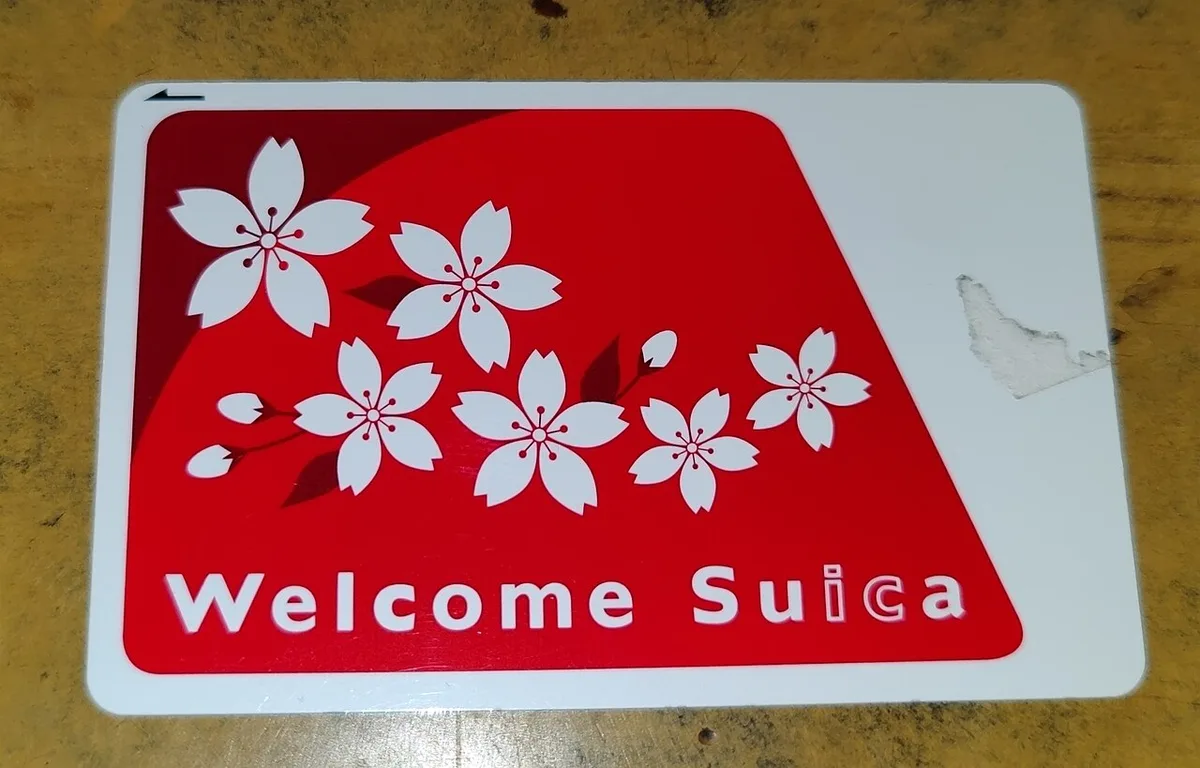

If you have an iPhone, get Welcome Suica Mobile before you fly: no deposit, no counter, and it lasts 180 days.[1],[2] If you do not, buy a Welcome Suica card, or a TOURIST PASMO at Narita or Haneda, or an ICOCA if you land at Kansai Airport. The one condition that flips the choice is time: the tourist cards expire after 28 days and keep whatever is left on them, so a stay longer than four weeks, or a wish to get your money back, points to a regular deposit card instead.[4],[5],[6]
Key facts
- The pick: Welcome Suica Mobile on iPhone or Apple Watch, valid 180 days, issued in the app before arrival.[1]
- Android or no Apple Pay: Welcome Suica, or TOURIST PASMO at Narita or Haneda, from ¥1,000, valid 28 days, no refund of the balance.[1],[19]
- Landing at Kansai Airport: ICOCA, ¥2,000 including a ¥500 refundable deposit.[8],[12]
- Staying over 28 days or wanting a refund: a regular deposit card, such as a PASMO, whose ¥500 deposit comes back when you turn the card in.[7]
- ICOCA cannot be used on Shinkansen trains,[9] and on the Tokaido, Sanyo and Kyushu Shinkansen an IC card opens the gate through a smartEX reservation; see “Do these cards work everywhere in Japan?”.[14],[15],[16]
| Item | Welcome Suica Mobile | Welcome Suica | TOURIST PASMO | ICOCA |
|---|---|---|---|---|
| Price (¥) | 0 | 1,000 | 1,000 | 2,000 |
| Valid days | 180 | 28 | 28 | |
| Who can get it | Overseas visitors to Japan with an iPhone (iOS 17.2 or later) or Apple Watch (Series 3 or later) and Apple Pay. No deposit or issuance fee; the balance expires 180 days after issuance and cannot be refunded. | Short-stay foreign visitors to Japan. No deposit; the balance cannot be refunded. | Mainly short-stay foreign visitors to Japan. No deposit; value is not refunded, even if unused. Child card until March 31 of the fiscal year the child turns 12. | Anyone. The ICOCA for foreign visitors (own design, one per person) needs a non-Japanese passport and 'Temporary Visitor' status. Deposit refundable. |
| Where to get it | Free app on the App Store (East Japan Railway Company); issue and top up in the app before or after arriving in Japan, with the credit card registered to Apple Pay or with cash at a ticket machine. | Sold by JR East in denominations from ¥1,000 (minimum load; no deposit); denominations differ by sales point. JR East lists the sales locations on its website; at Narita Airport the JR EAST Travel Service Centers are at Terminal 1 Central Building B1F and Terminal 2 Main Building B1F, before security. Topped up with cash at ticket machines. | Haneda Airport: Keikyu ticket machines for travelers at Terminal 1 and Terminal 2 stations, and the Keikyu Tourist Information Center plus one machine at Terminal 3, in ¥1,000, ¥2,000, ¥3,000, ¥4,000, ¥5,000 or ¥10,000 versions. Narita Airport: SKYLINER & KEISEI INFORMATION CENTER at Terminal 1 and Terminal 2 stations, ¥2,000 only. The full price is loaded as value (no deposit). | ¥2,000 including a ¥500 refundable deposit (¥1,500 loaded). Regular ICOCA at JR West ticket machines; the foreign-visitor design at the JR ticket office (Midori-no-madoguchi) at Kansai-airport Station. Refund at JR West ICOCA-area stations: deposit returned, ¥220 fee deducted from the balance. |
All four cards do the same job on the day: tap in and out on trains and buses, pay at convenience stores and vending machines. Ten regional IC cards, including Suica, PASMO and ICOCA, are accepted reciprocally across their areas nationwide, so a card bought in Tokyo works in Kyoto and Osaka and the other way round.[9],[18],[15] The differences are in how long the card lives, whether you can get your money back, and where you can physically obtain it.
Who is Welcome Suica Mobile for?
Anyone visiting Japan with an iPhone or Apple Watch. You can issue a Suica in the app at home, load it with the card in Apple Pay, and walk straight from the arrivals hall to the train.[1]
The balance expires 180 days after issuance, there is no deposit or issuance fee, and refunds are not available; once it expires you simply issue a new one in the same app.[1],[2] Top-ups go through the card registered to Apple Pay, or with cash at a ticket machine.[1] JR East also says the balance pays for non-reserved seats on Shinkansen in its own area without extra steps.[1]
The catch: it needs iOS 17.2 or later, or an Apple Watch Series 3 or later.[2] Android users and people whose bank card is refused by Apple Pay are back to a plastic card. Spend the balance down before day 180; anything left is lost.
Who is Welcome Suica for?
Visitors without a compatible iPhone who stay four weeks or less. JR East sells it with no deposit, so the whole price is loaded as value, and JR East’s release lists the card’s expiration as 28 days from first use, with no refund of the balance (TOURIST PASMO, below, counts from the date of purchase). Denominations start at ¥1,000 and vary by sales point.[1],[19]
JR East lists the sales points on its own website, so check it for the counter at your arrival airport.[3] You top it up with cash at ticket vending machines.[1]
The catch is the calendar: a 28-day life with no refund means an unspent ¥3,000 is gone the day after the card expires. If your trip is longer than four weeks, or you expect to come back, the regular card below is the better buy.
Who is TOURIST PASMO for?
The same traveller as Welcome Suica, but arriving on the private railways’ side of the airport.
It is valid for 28 days from the date of purchase, has no deposit, and any value on it is not refunded, even if you never used the card.[4],[5],[6] At Haneda it comes in ¥1,000 to ¥10,000 versions; at Narita it is sold only as a ¥2,000 card.[4],[6] You buy it at the Keikyu machines for travelers at Haneda Terminal 1 and Terminal 2 stations, at the Keikyu Tourist Information Center at Terminal 3, or at the SKYLINER & KEISEI INFORMATION CENTER at Narita Terminal 1 and Terminal 2 stations.[4]
The catch is the same 28-day expiry, plus two PASMO rules: the balance cannot exceed ¥20,000,[4],[5],[10] and a lost card is not reissued.[4] In practice, pick Welcome Suica or TOURIST PASMO by whichever counter is in front of you; they work identically once you are through the gate.
Who should get a regular ICOCA, Suica or PASMO?
Anyone staying more than 28 days, anyone who wants the money back, and anyone landing at Kansai Airport (関西空港). A blank PASMO can be used by anyone, but it charges adult fares only and is not reissued if lost.[7]
JR West’s ICOCA costs ¥2,000, of which ¥500 is the deposit and ¥1,500 is loaded. The version with a design for foreign visitors is sold one per person at the Midori-no-madoguchi (みどりの窓口) ticket office at Kansai-airport Station; you need a non-Japanese passport and “Temporary Visitor” status, and Japanese nationals are excluded.[8],[12]
Refunds are the point of this card. JR West refunds it at its stations in the ICOCA area, and a refund handling fee applies; if the balance is no more than that fee, you get only the ¥500 deposit back.[13] In Tokyo, a PASMO’s ¥500 deposit cannot be spent on fares and is refunded when you turn the card in.[7]
The catch: ICOCA is refunded at JR West stations in the ICOCA area, so do not expect to hand it in at Narita on your way home; spend it down or refund it before you leave the JR West area.[13]
Do these cards work everywhere in Japan?
For local trains, subways, buses and shops, yes: the ten cards are mutually accepted across their areas, which is why a Tokyo card works in Osaka.[9],[18],[15] Two limits catch visitors. First, with some exceptions, one journey cannot start in one IC area and end in another; and within the ICOCA area, trips over 200 km are refused unless they stay inside the Osaka suburban area, run between an Osaka suburban station and a conventional-line station where the Thunderbird, Shirasagi or Kuroshio stops, or run between Yakumo stations.[9] Outside the cards’ areas, check the operator before you rely on the card.
Second, the Shinkansen. JR West states plainly that ICOCA cannot be used on Shinkansen trains as a fare card.[9] On the Tokaido, Sanyo and Kyushu Shinkansen the way around it is smartEX: register the card (Welcome Suica qualifies) to a reservation and tap it at the gate; the fare is charged to your credit card, not the IC balance, and an expired tourist card will not open the gate.[14],[15],[16] How to ride Tokyo–Kyoto with an IC card and smartEX walks through that.
How do I decide?
Three questions settle it. Answer them in order; the first one that gives a clear answer decides the card.
Three questions
- Do you have an iPhone or Apple Watch with Apple Pay? Yes: Welcome Suica Mobile. No: a plastic card.
- Is your stay 28 days or less, and are you happy to spend the last few hundred yen on snacks? Yes: Welcome Suica or TOURIST PASMO. No: a regular deposit card such as PASMO or ICOCA.[7]
- Where do you land? Narita or Haneda: TOURIST PASMO at the Keikyu or Keisei counters,[4] or a Welcome Suica from one of the sales points JR East lists.[3] Kansai Airport: the ICOCA office at Kansai-airport Station.[8],[12]
Whichever card you choose, plan its last day. A tourist card is best spent down to zero at a convenience store, since nothing comes back; an ICOCA is refunded only at JR West stations in the ICOCA area, so do that before you head to the airport, or keep the card for your next trip.[13]
Frequently asked questions
Is there a child version of the tourist cards?
What happens if I lose the card?
Can I top up with a foreign credit card?
JR East lists cash at ticket vending machines for the Welcome Suica card. The phone versions take a card: Welcome Suica Mobile through the card registered to Apple Pay,[1] and ICOCA in Apple Wallet with a Visa, Mastercard, JCB or American Express card.[11] However you top up, TOURIST PASMO and ICOCA refuse a top-up that would take the balance over ¥20,000.[4],[5],[10]
Can I use the card on the Skyliner or Narita Express from the airport?
Keisei accepts approved IC cards such as PASMO or Suica at the ticket gates for the Skyliner fare, so you can tap through with a card bought at the airport.[17] Which airport train is worth it is a separate decision: the Narita routes with their IC fares compares them.
Does the Japan Rail Pass replace an IC card?
No. The pass is valid on JR Group railways; on a private railway you pay the fare for the section you use, so an IC card is still useful.[20]
Should I wait for a card with a longer life?
Sources
- Releasing the Welcome Suica Mobile App for Overseas Visitors to Japan (JR East, February 18, 2025) (checked )
- Welcome Suica Mobile on the App Store (checked )
- 無記名の「Suica」・「PASMO」カード発売の再開に関するお知らせ (checked )
- TOURIST PASMO (checked )
- Rules for Using TOURIST PASMO (checked )
- 訪日外国人向けICカード乗車券「TOURIST PASMO」を発売します! (checked )
- Use PASMO Card (checked )
- JR-West — ICOCA GUIDE (checked )
- JR-West — ICOCA Usage Area (checked )
- JR-West — ICOCA Electronic Money (checked )
- JR-West — ICOCA on Apple Pay (checked )
- ICOCAの購入(JRおでかけネット) (checked )
- ICOCAの払いもどし(JRおでかけネット) (checked )
- smartEX — Boarding with an IC card (checked )
- smartEX — About the service (usable IC cards) (checked )
- smartEX FAQ — IC cards for foreign visitors (checked )
- Keisei — Skyliner fares (checked )
- JNTO — IC Travel Cards (checked )
- GO TOKYO — Cheap Tickets & IC Cards (checked )
- Scope of validity (JAPAN RAIL PASS) (checked )
- JR Central — Adults and Children (checked )