
Narita Airport to Tokyo (2026): Skyliner from 36 Minutes
Skyliner to Nippori from 36 minutes (¥2,580), Narita Express direct to Tokyo Station and Shinjuku, or a ¥1,500 low-cost bus to Tokyo Station or Ginza.
Advertising: this article contains affiliate links. We may earn a commission at no extra cost to you.
Every figure is checked against the sources listed below. See sources
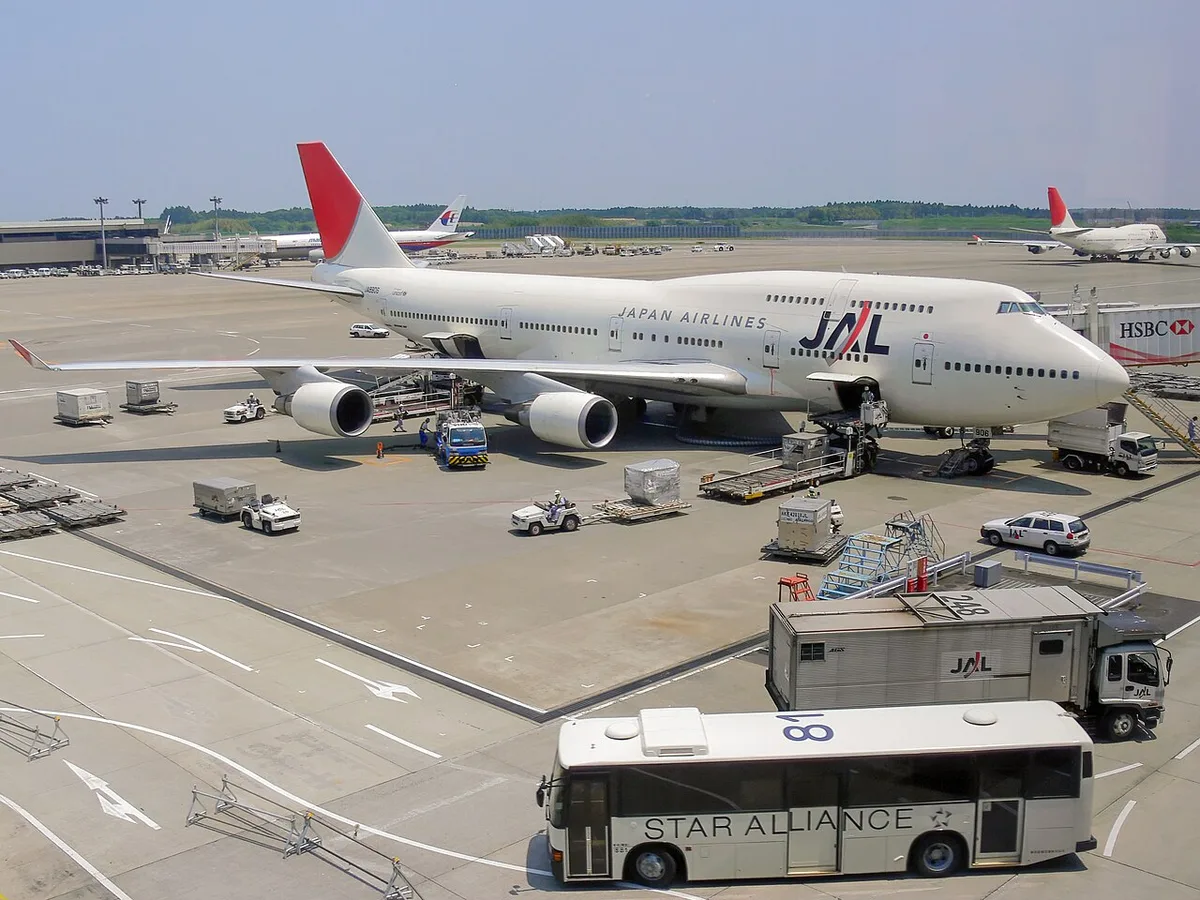

Take the Keisei Skyliner if your hotel is in Ueno, Asakusa, Akihabara or anywhere on the north and east side of the Yamanote loop, or if you are happy to change trains once at Nippori (日暮里); take the JR Narita Express (N’EX) if you are going to Tokyo Station, Shinagawa, Shibuya or Shinjuku, or if you have a Japan Rail Pass starting today. The Access Express is the cheapest train, and a low-cost bus is cheaper still if your destination is Tokyo Station or Ginza.
Key facts
- Fastest: the Skyliner, as little as 36 minutes from Terminal 2·3 to Nippori, ¥2,580 for an adult paying cash.[3],[4],[1],[2]
- Shinjuku without a change: the N’EX, for example 12:20 from Terminal 1 to Shinjuku at 13:41.[19]
- Cheapest train: the Keisei Access Express to Nippori or Ueno for the ¥1,280 base fare alone (¥1,267 by IC card), no seat reservation, no surcharge.[5],[6],[8],[2],[11]
- Cheapest overall: low-cost buses to Tokyo Station or Ginza for ¥1,500, about 68 minutes to Tokyo Station.[13],[20]
- Last departures (weekdays): Skyliner 23:00 on the timetable valid until November 21[7], Narita Express 21:44, though not every day.[15],[16],[17],[18]
- Luggage: the Skyliner has a 1.52-meter-wide luggage space in every car.[2] GO TOKYO points travelers with lots of baggage to the buses.[20]
Which route fits my destination?
| Destination | Direct option | Time | Adult fare | Alternative |
|---|---|---|---|---|
| Nippori | Skyliner | From 36 min | ¥2,580 (online ¥2,310) | Access Express, ¥1,280 |
| Keisei-Ueno | Skyliner | From 41 min | ¥2,580 (online ¥2,310) | Access Express, ¥1,280; Main Line ¥1,060 |
| Tokyo Station | Narita Express | About 60 min | Covered by an active JR Pass | Low-cost bus, ¥1,500, about 68 min |
| Shinjuku | Narita Express | About 90 min; 12:20 departure arrives 13:41 | Covered by an active JR Pass | Skyliner to Nippori, then JR |
| Shinagawa, Shibuya | Narita Express | 12:20 departure arrives 13:23 and 13:35 | Covered by an active JR Pass | Access Express to Shinagawa, no limited express fare |
| Ginza | Low-cost bus | About 81 min | ¥1,500 | — |
| Oshiage, Nihombashi, Shimbashi | Access Express | 46 min to Oshiage | No limited express fare | Main Line, 64 min to Oshiage |
The times are the operators’ own: Keisei’s 36 minutes is the fastest Skyliner from Terminal 2·3 to Nippori and 41 minutes its fastest to Keisei-Ueno; most trains take a few minutes longer.[3],[4],[1],[2] For the N’EX, GO TOKYO, the Tokyo Convention & Visitors Bureau’s guide, gives approximately 60 minutes to Tokyo Station and 90 minutes to Shinjuku[20], and JR East’s timetable shows a midday train taking from 12:20 to 13:41 to Shinjuku.[19] The Access Express figure is Keisei’s 46 minutes to Oshiage, against 64 minutes for the cheaper Main Line rapid limited express.[2] The low-cost bus fare is Narita Airport’s own figure.[13],[20]
If you land at Haneda instead, the Haneda Airport to Tokyo routes by Keikyu, Monorail, bus and taxi compares them.
Skyliner: Ueno, Nippori and the north side
The Skyliner is two tickets in one: a ¥1,280 base fare and a ¥1,300 reserved-seat Skyliner ticket, ¥2,580 together for an adult and ¥1,290 for a child.[1],[2],[3] Every seat is reserved, so you cannot stand in a full train; if you board without a Skyliner ticket you pay a ¥300 surcharge on top.[3],[4],[1],[2] It stops only at Nippori and Keisei-Ueno in Tokyo. Nippori is the better change for most people: the JR Yamanote and Keihin-Tohoku lines are one floor up, and from there Tokyo Station, Shinjuku, Shibuya and Ikebukuro are a single ride.
Buy online if you can. The Skyliner e-ticket costs ¥2,310 one way, ¥270 less than the counter price, and ¥1,150 for a child; a round trip bought online is ¥4,500, but it can only be exchanged at the two airport stations, not in Tokyo.[3]
Narita Express: Tokyo Station, Shinagawa, Shibuya, Shinjuku
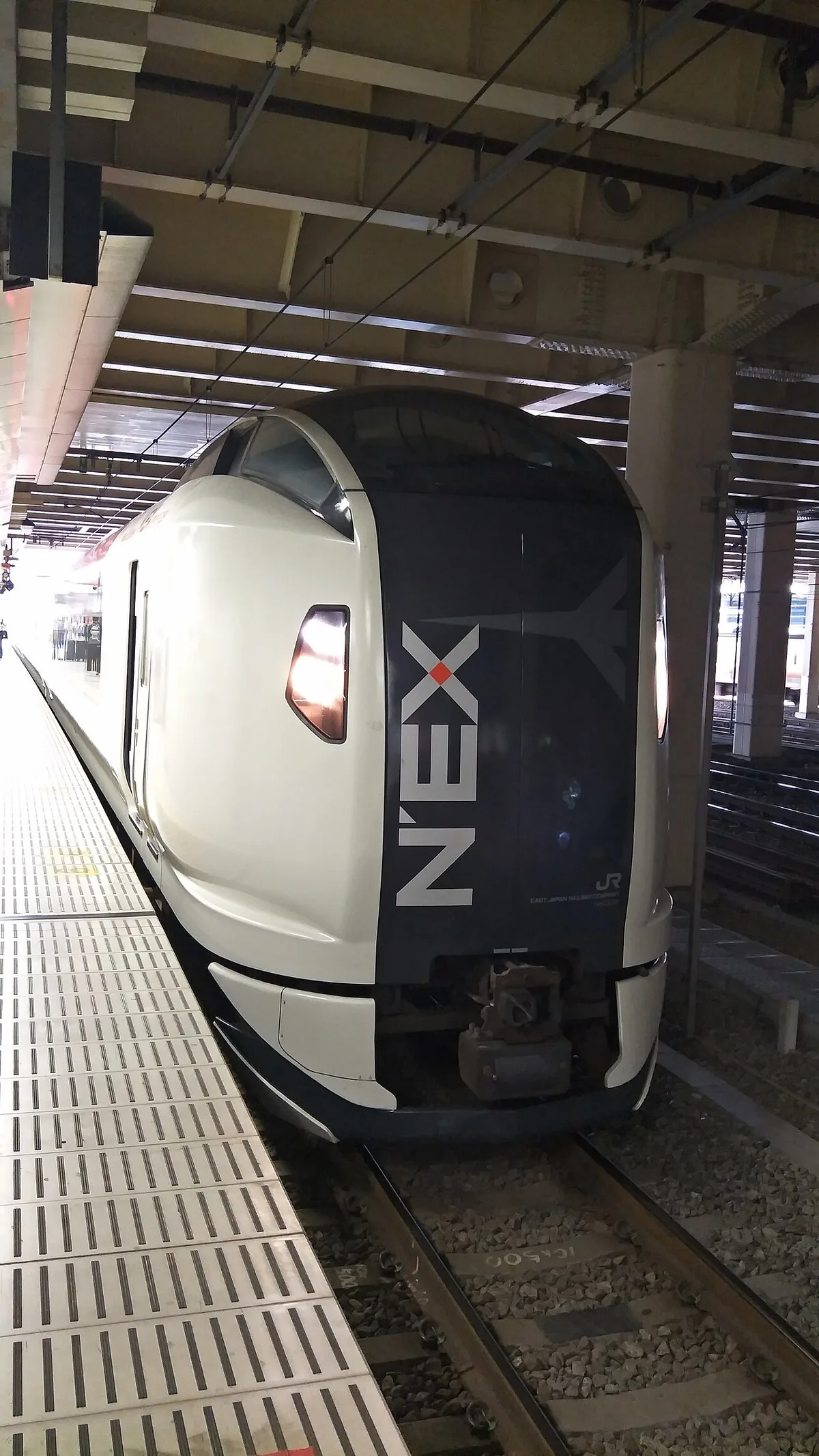
The N’EX runs straight into Tokyo Station and on through Shinagawa, Shibuya and Shinjuku, with some trains continuing to Yokohama and Ofuna.[11] It is a JR East limited express, so a Japan Rail Pass that is already active covers it; GO TOKYO confirms the pass is valid on it and that all seats are reserved.[20] The timetable is thinner than the Skyliner’s: on weekdays the first N’EX leaves Terminal 1 at 7:37 and the last at 21:44, with two departures in most hours, but JR East marks every departure from 18:45 onward as not running every day, so check your date.[15],[16],[17],[18] If you are heading on to Kyoto the same day, Tokyo Station is where the Tokaido Shinkansen to Kyoto starts.
Access Express: the cheapest train
The Access Express uses the same Narita Sky Access tracks as the Skyliner but as an ordinary commuter train: Keisei’s station fare table gives ¥1,280 to Nippori or Keisei-Ueno (¥1,267 by IC card, ¥640 for a child), no limited express fare is required, and trains run through directly to Nihombashi, Shimbashi and Shinagawa.[5],[6],[8],[2],[11] The Keisei Main Line limited express via Keisei-Narita is cheaper again at ¥1,060 but slower. The trade-off is time and comfort: Keisei gives 46 minutes to Oshiage, and it is a commuter train without the Skyliner’s luggage space or reserved seats.[2] For Asakusa, Nihombashi or Shimbashi it is also the only train without a change.
Low-cost buses: Tokyo Station and Ginza
Narita Airport lists low-cost buses to Tokyo Station, Ginza and Shinonome at ¥1,500 (late-night and early-morning runs cost more), operated by the Keisei Bus group, JR Bus Kanto and BE-Transse; GO TOKYO gives about 68 minutes to Tokyo Station and ¥3,000 for the late-night and early-morning rides.[13],[20] GO TOKYO also recommends buses if you are heading to a busy part of Tokyo with lots of baggage, and notes that each operator’s buses use different stops, so check the stop before you buy.[20]
How do I get from Narita to Shinjuku?
The N’EX is the train that runs to Shinjuku without a change, through Tokyo Station, Shinagawa and Shibuya.[11] On JR East’s current timetable, Narita Express 20 leaves Terminal 1 at 12:20, reaches Tokyo at 13:15 and Shinjuku at 13:41.[19] GO TOKYO gives approximately 90 minutes to Shinjuku Station, and an active Japan Rail Pass covers the train.[20] Not every N’EX goes to Shinjuku: trains divide at Tokyo, with one part continuing to Shinjuku and the other to Ofuna, so board the cars marked for Shinjuku.[15],[16],[17],[18]

Arriving in the evening, check your date first. The 21:44 from Terminal 1 reaches Shinjuku at 23:12 on the days it runs that way, but JR East marks it as not running every day.[18],[15] The Skyliner runs later, with the last weekday train at 23:00 reaching Nippori at 23:43[7]; from Nippori you change to JR through ticket gate B with your Keisei ticket and an IC card, or with a JR ticket if you have no IC card.[9] A fixed-fare taxi to Shinjuku ward costs ¥31,500 or ¥32,500 depending on the expressway, plus tolls, with a surcharge from 22:00 to 5:00.[14]
How do I take the Skyliner, step by step?
These steps begin in the arrivals hall, after immigration and customs; how to register for Visit Japan Web before you land covers that part of the arrival.
Walk down to the station on B1F5–10 min
Both airport stations are under the terminals. Narita Airport Terminal 1 Station is a 5-minute walk from Terminal 1; Narita Airport Terminal 2·3 Station is 5 minutes from Terminal 2 and 10 minutes from Terminal 3.[11] Keisei and JR tickets are both sold in front of their own gates on that floor.[12]
Get cash on 1F first if you need it
Keisei takes major credit cards only for Skyliner tickets or combined base-fare-and-Skyliner tickets; everything else at its counters is cash, and it advises using the exchange counters and ATMs on the arrivals floor (1F) because B1F has few or none.[2] If you already have an IC card, you can skip the base-fare purchase and tap in; the Skyliner ticket is still bought separately.[1],[2]
Buy or exchange your Skyliner ticket5–15 min
Tickets are sold in front of the gates of each line on B1F; the SKYLINER & KEISEI INFORMATION CENTER is in the Terminal 1 Central Building B1F and the Terminal 2 Main Building B1F, before security.[12] Skyliner tickets come from the Skyliner counter or Skyliner machines, not the general ticket machines, and sales open one month ahead.[1],[2]
Ride to Nippori or Keisei-Ueno36–41 min
On the timetable valid until the November 21 timetable change, only five Skyliners leave before 10:00 on weekdays (7:23, 8:12, 9:07, 9:36 and 9:53); from then on departures are 14 to 26 minutes apart until the last at 23:00, which reaches Nippori at 23:43 and Keisei-Ueno at 23:48.[7] Get off at Nippori if you are continuing on JR; ride to Keisei-Ueno for Ueno Park, the Ginza subway line or hotels around Ueno.
Change to JR at Nippori5 min
Go up to the transfer floor and through ticket gate B. With your Keisei ticket and an IC card, you pass using both; without an IC card you need a JR ticket for the onward leg. Holders of the Keisei Skyliner & Tokyo Subway Ticket or the Greater Tokyo Pass cannot transfer at Nippori and must ride to Ueno.[9]
Taking the N’EX instead is simpler in steps and slower in trains: buy or pick up at the JR EAST Travel Service Center on B1F (Terminal 1 Central Building or Terminal 2 Main Building), pass the JR gates on the same floor, and board the reserved car printed on your ticket.[12] Check the destination on the departure board: trains are bound for Tokyo and on to Shinjuku or Ofuna.[15],[16],[17],[18]
Which pass or card covers this?
The Japan Rail Pass covers the N’EX and nothing Keisei runs; the Skyliner, the Access Express and the buses are outside it.[20] Whether to activate the pass on arrival day, or buy a one-way airport ticket and start the pass later, is a trip-level decision: the JR Pass review’s break-even figures settle it.
IC cards work on both operators. On Keisei an IC card pays the ¥1,267 base fare at the gate, and the Skyliner ticket is bought on top.[1],[2] If you have not decided which card to get, the IC card comparison for visitors covers what each airport counter sells.
Frequently asked questions
Where do I put a large suitcase on the Skyliner?
In the luggage space at the end of each car, which Keisei states is 1.52 meters (5 feet) wide and watched by security cameras; every seat also has a power outlet.[2] The Access Express has no equivalent space, so a large case stays beside you.
Can I use a stroller or a wheelchair?
Does my IC card work on the Skyliner?
Yes, for the base fare: tap in at the Keisei gate and the ¥1,267 IC base fare is deducted, which is ¥13 less than the ¥1,280 paper fare; the ¥1,300 Skyliner ticket is still bought at the counter, machine or online.[1],[2] At Nippori the same card, used with your Keisei ticket, gets you through the JR transfer gate.[9]
Which station do I use from Terminal 3?
Narita Airport Terminal 2·3 Station, a 10-minute walk from Terminal 3 (5 minutes from Terminal 2); Terminal 1 has its own station, Narita Airport Terminal 1.[11]
How much time should I allow between landing and the train?
We found no operator figure for this, so build in the airport’s own walking times of 5 to 10 minutes to the station and the ticket queue.[11] Completing Visit Japan Web before you land is what shortens the immigration and customs part.
Is there a Skyliner discount if I come back to Narita?
Yes. The online round trip costs ¥4,500 for an adult against two one-way tickets at ¥2,580, but it must be exchanged at Narita Airport Terminal 1 or Terminal 2·3 Station on arrival, not in Tokyo.[3]
Sources
- 京成電鉄 スカイライナー チケット購入のご案内 (checked )
- Skyliner FAQ (Keisei Electric Railway) (checked )
- Skyliner Discount Ticket (Keisei Electric Railway) (checked )
- Skyliner Special Discount Tickets (Keisei Electric Railway) (checked )
- 京成線駅別運賃表 成田空港(成田湯川経由) 2025年4月1日時点(京成電鉄) (checked )
- 京成線駅別運賃表 成田空港(京成成田経由) 2025年4月1日時点(京成電鉄) (checked )
- スカイライナー時刻表(京成電鉄) (checked )
- Access Express Route Map and Timetable (Keisei Electric Railway) (checked )
- Nippori Station: transfer to the JR Line (Keisei Electric Railway) (checked )
- Keisei Line operation information (checked )
- Rail access (Narita International Airport) (checked )
- Train Tickets (Narita International Airport) (checked )
- LCB (low-cost bus) (Narita International Airport) (checked )
- Taxi (Narita International Airport) (checked )
- Narita Airport Terminal 1 Station timetable: Narita Express (JR East) (checked )
- Narita Express 2: list of stations (JR East) (checked )
- Narita Express 46: list of stations (JR East) (checked )
- Narita Express 54: list of stations (JR East) (checked )
- Narita Express 20: list of stations (JR East) (checked )
- Narita International Airport — GO TOKYO (Tokyo Convention & Visitors Bureau) (checked )