
Visit Japan Web: do you need it, and how to fill it in
Visit Japan Web is free and optional. How to get the immigration and customs QR code before landing, where the joint kiosks are, and what if you skip it.
Advertising: this article contains affiliate links. We may earn a commission at no extra cost to you.
Every figure is checked against the sources listed below. See sources
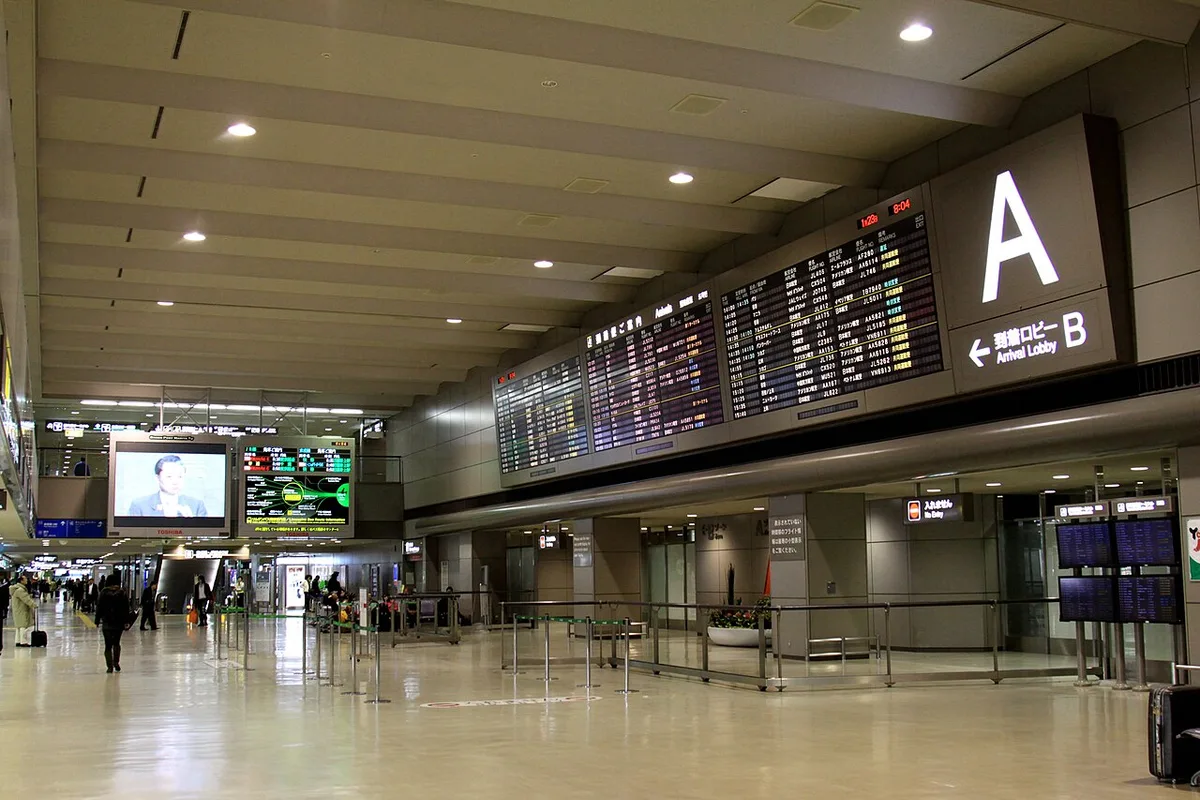

Fill in Visit Japan Web before you fly if you want to walk up to the immigration counter and the customs machines with one QR code instead of two paper forms. You do not have to: Japan Customs requires every arriving passenger to make a customs declaration, but it accepts the paper form handed out on the plane or waiting at Customs just as it accepts the electronic one.[5],[6] The service is run by the Digital Agency, covers immigration clearance and customs declaration, and also works for Japanese nationals returning home.[1],[2] It is free, it is not a visa, and it is not the future travel authorization called JESTA.
Key facts
- Cost: free. Japan Customs charges nothing for electronic declaration and warns against sites that ask for a fee.[11]
- Optional: the paper customs form is still accepted on arrival.[5],[6]
- You need: your airline ticket, your passport and an email address; the QR code is shown from a smartphone or tablet.[1],[2]
- Where it is used: the immigration counter, the customs electronic declaration terminal, or an integrated kiosk at Narita Terminal 3, Haneda, Kansai and Fukuoka.[8]
- One QR code covers immigration and customs since January 25, 2024.[6],[1]
Before you start
- Passport for every traveler, with the photo page ready to scan
- Your airline ticket, for the flight details
- Contact details of where you will stay in Japan
- An email address you can open during registration
Do I have to use Visit Japan Web?
No. Japan Customs requires all passengers to submit a Declaration of Accompanied Articles and Unaccompanied Articles, recommends doing it electronically through Visit Japan Web, and states that the existing paper form can still be used, including a copy printed on A4 paper at home.[5],[6] That requirement is not new: every arriving passenger has had to hand in the form since July 2007.[12] What the QR code changes is the queue: it lets you use the electronic declaration terminals and gates, and at four airports the integrated kiosks that do immigration and customs together.
Registering takes a passport, a flight and an address, nothing else. You can type everything on a PC, but the code itself has to be presented on a phone or tablet, so plan to log in on the device you will carry through the airport.[1],[2]
How do I fill it in?
The Digital Agency’s guide splits the work into what you do before you fly (create an account, register yourself, register the trip, fill in the entry procedure) and what you do on arrival (show the QR code).[3],[4] Expect to spend most of the time on the passport scan and the address of where you stay.
Register the trip
There are three ways to register it: enter your plan to enter Japan and your contact information in Japan; quote a trip you registered before, which copies only your place of stay in Japan; or quote the information from your visa application.[3],[4] For the visa route, enter the visa issue number and choose “Get visa information” to display the visa, then “Quote this visa information” to copy it into the trip.[3],[4]
What happens at the airport?
Which machine you meet depends on the airport. At Narita Terminal 3, Haneda, Kansai and Fukuoka, integrated kiosks take the QR code and your IC passport, photograph you (foreign nationals also give fingerprints), and show a letter from a to d that tells you which lane to follow; immigration is then finished at a dedicated booth and, if Customs needs no inspection, you leave through a gate that recognizes your face.[8] Fukuoka was the last to start, with kiosks inside the inspection area from December 1, 2025 and in the arrivals flow from April 1, 2026.[9]
Japan Customs publishes the hours for the kiosks in the arrivals flow; kiosks inside the immigration inspection area are the Immigration Services Agency’s and are not listed.[10]
| Airport | Integrated kiosk hours |
|---|---|
| Haneda Terminal 3 | 24 hours |
| Haneda Terminal 2 | 4:30–23:30 |
| Narita Terminal 3 | 7:00–21:30 |
| Kansai Terminal 1 | 8:00–22:00 |
| Kansai Terminal 2 | 9:00–21:00 |
| Fukuoka | 7:00–21:00 |
Everywhere else, including Narita Terminals 1 and 2, you show the QR code at the immigration counter, then at the customs electronic declaration terminal or the inspection table; after the terminal you use the electronic declaration gate.[3],[4] Those gates exist at 7 airports: New Chitose, Narita, Haneda, Chubu Centrair, Kansai, Fukuoka and Naha, and they require an IC passport.[7] At Haneda, Fukuoka and Naha the terminals stand in the baggage hall, so you can declare while you wait for your suitcase.[3],[4]
Each person goes through the terminal one at a time, including children, though a child under 100 cm can pass the gate with a parent. Take off masks and sunglasses for the camera. Declaring electronically does not exempt you from inspection: anyone over the duty-free allowance or with unaccompanied baggage is sent to the staffed desk.[7]
What if something goes wrong?
Is Visit Japan Web the same as JESTA or a visa?
No to both. The Digital Agency describes Visit Japan Web as a service for immigration clearance, customs declaration and tax-free shopping, not as a visa service.[1],[2] If you applied for a visa, the trip registration can quote that visa’s information from its issue number.[3],[4] Whether you need a visa depends on your nationality and purpose, and that decision belongs to the Japanese government, not to this article: check the Ministry of Foreign Affairs’ or the Immigration Services Agency’s pages for your own case.
JESTA is different again. In the Zero Illegal Foreign Residents Plan published on May 23, 2025, the Immigration Services Agency states the aim of introducing JESTA (Japan Electronic System for Travel Authorization), a pre-screening based on information submitted online before travel, in FY2028, earlier than the originally planned 2030.[13],[14] That is a plan, not a live requirement: as of this article’s review date there is nothing to apply for, and any site selling “JESTA applications” is selling nothing.
What comes next after customs?
With the QR code done, the next decision is the train. If you land at Narita, the Skyliner, Narita Express and bus options into Tokyo compares fares, times and last departures.
The other thing to settle in the arrivals hall is a prepaid IC card for the subway and local trains; which IC card to buy at the airport covers Welcome Suica, PASMO PASSPORT and ICOCA.
If you have not arranged mobile data yet, an eSIM installed before the flight gets you online as soon as you land, with no SIM counter to find.
If a Japan Rail Pass is part of the plan, its exchange is the other airport errand; who the Japan Rail Pass pays off for covers eligibility, the Temporary Visitor stamp and the break-even routes.
Frequently asked questions
Do my children go through the machines with me?
I am a Japanese national or a resident with a re-entry permit. Do I fill in the same forms?
How much can I bring in duty-free?
Per adult: 3 bottles of alcohol (about 760 ml each), 200 cigarettes or 50 cigars or 250 grams of other tobacco or 10 packages of heat-not-burn tobacco, 2 ounces of perfume, and other goods under ¥200,000 in total overseas market value, with any single item under ¥10,000 left out of the count. Cash and other means of payment exceeding 1 million yen must be declared separately.[5]
Does Visit Japan Web handle tax-free shopping?
Do I pay a departure tax through Visit Japan Web?
No. The International Tourist Tax (departure tax) is ¥3,000 per departure from July 1, 2026, or ¥1,000 on eligible tickets issued on or before June 30, 2026; children under 2 and transit passengers leaving within 24 hours are exempt. Airlines and shipping lines collect it, usually inside the ticket price, so there is nothing to register or pay at the airport.[15],[16]
I need a Temporary Visitor stamp for a rail pass. Does the kiosk still stamp my passport?
Integrated kiosk users complete immigration at a dedicated staffed booth rather than a fully automated gate.[8] The stamp or sticker rules themselves are set by the pass issuer, not by Visit Japan Web, so check the issuer’s eligibility conditions before you choose a lane.
Sources
- Visit Japan Web | Digital Agency Services (checked )
- Visit Japan Web | デジタル庁 ウェブサービス・アプリケーション (checked )
- How to use | Visit Japan Web | Digital Agency Services (checked )
- 利用について | Visit Japan Web | デジタル庁 ウェブサービス・アプリケーション (checked )
- Procedures of Passenger Clearance : Japan Customs (checked )
- Declaration of Accompanied Articles and Unaccompanied Articles : Japan Customs (checked )
- The Electronic Customs Declaration Gates (e-Gates) are available at 7 International Airports : Japan Customs (checked )
- Immigration and Customs procedures in one! (Integrated KIOSKs) : Japan Customs (checked )
- Start Dates of Joint Kiosk Operations by Airport (Terminal) (Japan Customs PDF) (checked )
- Operating Hours by Airport (Terminal) (Japan Customs PDF) (checked )
- Beware of Fake Websites Related to Customs Procedures : Japan Customs (checked )
- 入国時の税関手続 : 税関 Japan Customs (checked )
- Zero Illegal Foreign Residents Plan for the Safety and Security of the People (ISA, English PDF) (checked )
- 「国民の安全・安心のための不法滞在者ゼロプラン」について | 出入国在留管理庁 (checked )
- International Tourist Tax — Basic knowledge | National Tax Agency JAPAN (checked )
- International Tourist Tax (System Overview) — Japan Tourism Agency leaflet (checked )