
Iya Vine Bridge in Winter: Hours, the 2027 Rebuild and Buses
The Kazurabashi vine bridge is open in winter except during its 2027 rebuild; the Oku-Iya bridges and Kotohira shuttle stop. Hours, buses from Oboke, snow.
Every figure is checked against the sources listed below. See sources
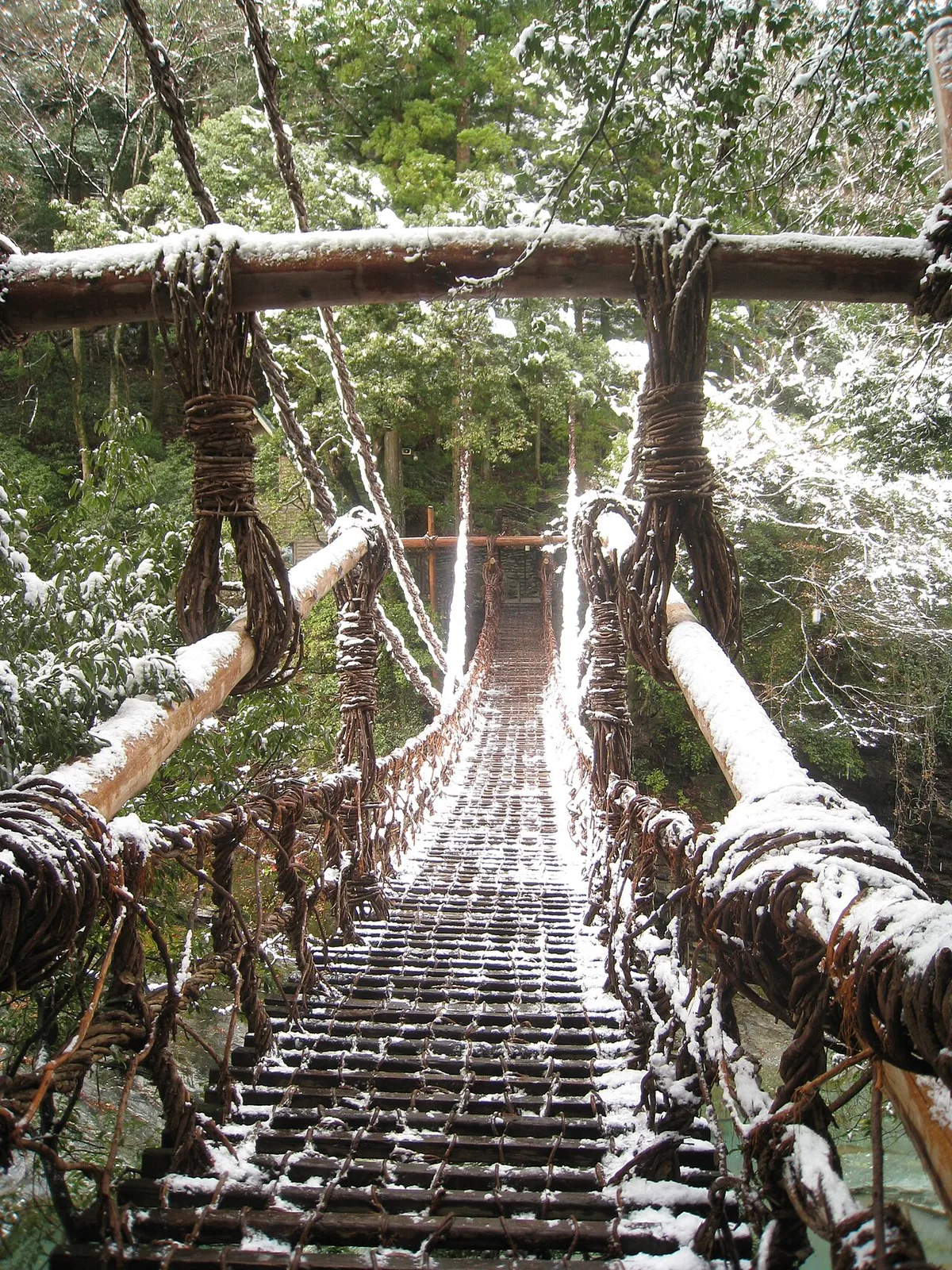

Yes, except during its rebuild in early 2027. The Iya Kazurabashi (祖谷のかずら橋) does not close for winter: it is open every day, 8:00–17:00 from September to March.[1],[2] In 2027, though, it cannot be crossed from January 12 to around the end of February while it is rebuilt.[3] Two other things stop every winter. The Oku-Iya Double Vine Bridges deeper in the valley are closed from December 1 to March 31,[4] and the Kotobus shuttle from Kotohira does not run from December to February.[6],[7] Without a car, you reach the bridge on the Shikoku Kotsu route bus from Oboke (大歩危) or Awa-Ikeda (阿波池田) Station, and Miyoshi City’s timetable lists no winter break for it.[5]
Key facts
- Vine bridge in winter: open daily, 8:00–17:00 from September to March, no regular closing days.[1],[2]
- Closed for rebuilding: January 12, 2027 to around the end of February.[3]
- Fee: ¥550 for adults, ¥350 for elementary school students.[1],[2]
- Closed in winter: the Oku-Iya Double Vine Bridges, December 1 to March 31.[4]
- Not running in winter: the Kotobus shuttle from Kotohira, December to February.[6],[7]
- Bus from Oboke Station: the 08:58 bus reaches Kazurabashi Yumebutai at 09:19.[5]
- Last bus back: 17:41 from Kazurabashi Yumebutai, at Oboke Station 18:09.[5]
Is the vine bridge open in December, January and February?
Yes, every day. Miyoshi City, which runs the bridge, lists it as open all year with no regular closing days. From September to March the hours are 8:00–17:00, and the entrance closes at 17:00.[1],[2] That is the shortest opening of the year, so a winter visit needs an earlier start than a summer one.
The exception is the winter of 2027. The bridge is rebuilt once every three years, and Miyoshi City’s tourism association says it cannot be crossed from January 12, 2027 to around the end of February while the work goes on; the evening light-up stops for that period too.[3] If your trip falls in those weeks, plan the crossing for December or from March instead, and check Miyoshi City’s tourism site for the final dates.
The fee does not change with the season: ¥550 for adults (junior high school age and older), ¥350 for elementary school students, and free for preschool children.[1],[2] Miyoshi City’s Japanese page says you can pay by cashless payment as well as cash.[2]
Winter is also when the bridge’s material is made. Miyoshi City says the vines used to weave it are gathered in the mountains in the severe cold of winter.[1],[2]
What closes in winter?
The Oku-Iya Double Vine Bridges (奥祖谷二重かずら橋), the second pair of vine bridges in the upper valley, close from December 1 to March 31.[4] The buses that go there are seasonal too: Miyoshi City’s timetable shows them running only on weekends and national holidays from April 4 to November 23.[5] In winter, see the main bridge and leave Oku-Iya for a spring-to-autumn trip.

Can I cross in snow or ice?
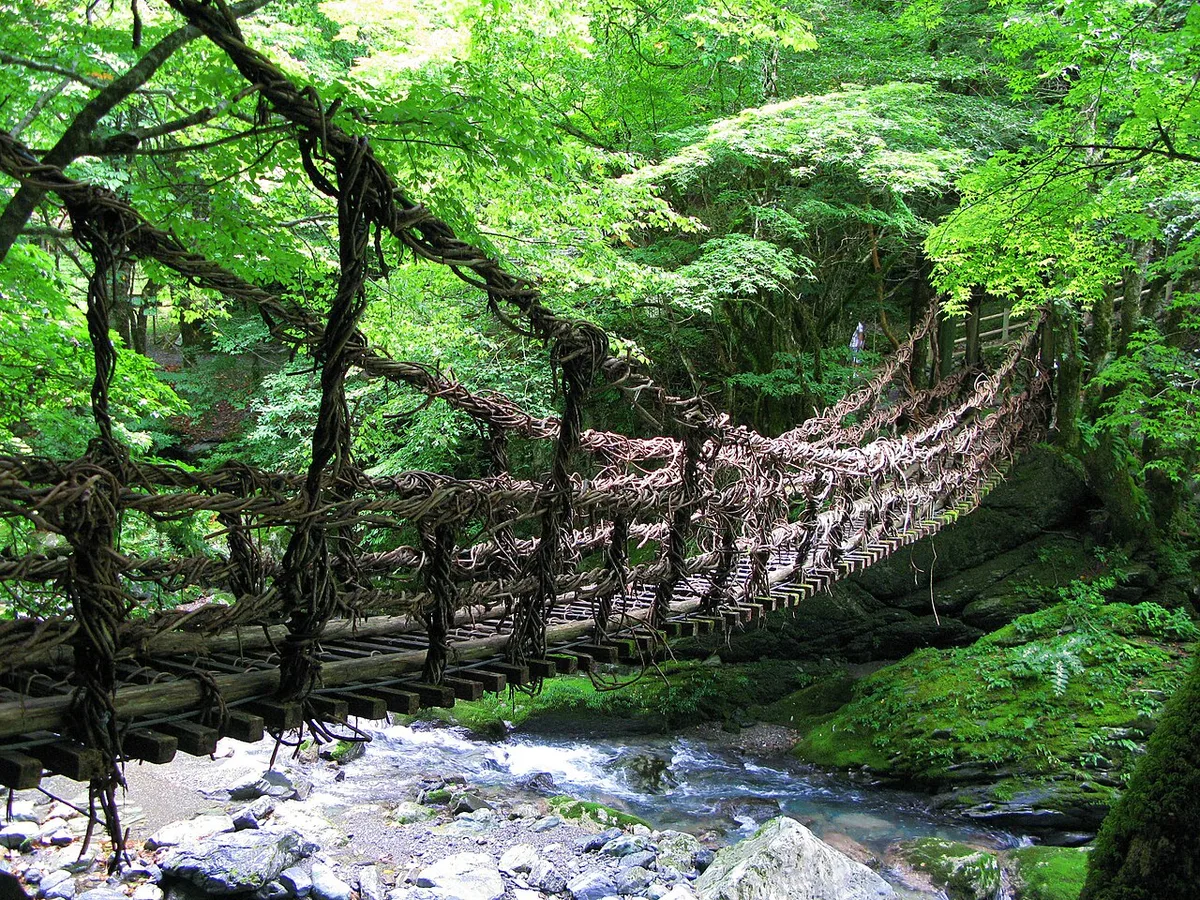
Miyoshi City does not publish a separate rule for snow. What it says is that the bridge stays open on rainy days and may close temporarily during a heavy rain warning or other severe weather.[1],[2] On a day with a snow or storm warning, check Miyoshi City’s tourism site before you set out. Check the roads as well as the bridge: the main road into the valley is on the national snow-closure list (see the driving section below).
The bridge is lit up every evening from 19:00 to 21:30, but you cannot cross while it is lit.[1] For wind and rain, the Iya Valley guide covers the same rules for the rest of the year.
Which buses run in winter?
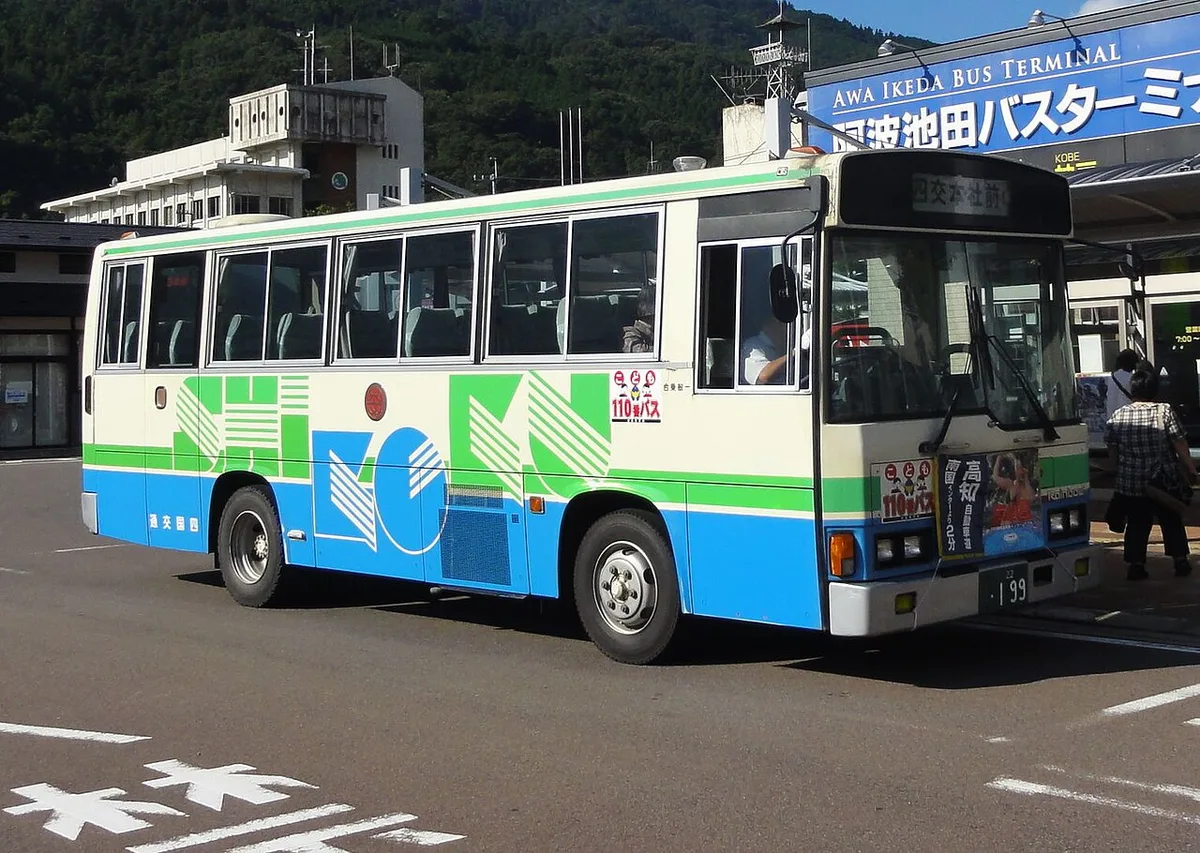
The bus that matters is Shikoku Kotsu’s Nishi-Iya Line. It runs from Awa-Ikeda via Oboke Station to Kazurabashi Yumebutai (かずら橋夢舞台), the stop a 5-minute walk from the bridge.[1] Miyoshi City’s English timetable, dated October 1, 2026, gives no seasonal break for this line; the only seasonal notes are for the Oku-Iya and Mt. Tsurugi buses.[5][5]

| Item | Shikoku Kotsu Nishi-Iya Line | Kotobus shuttle from Kotohira | Taxi tour from Oboke |
|---|---|---|---|
| Runs in winter? | Yes, no seasonal break listed | No, suspended December to February | Not listed as seasonal |
| From | Oboke Station or Awa-Ikeda | Kotohira | JR Oboke Station |
| Departures to the bridge | 08:58, 10:08, 11:08, 11:58, 13:08, 14:53, 16:33, 17:08 from Oboke Station | — | When you book |
| Fare | ¥1,290 from Awa-Ikeda | — | About ¥14,700 for up to 4 people |
Figures come from Miyoshi City’s bus timetable,[5] its fare list,[5] the Kotobus winter suspension[6],[7] and Miyoshi City’s taxi tour estimate.[11]
Coming back, buses leave Kazurabashi Yumebutai at 08:11, 09:11, 11:11, 12:11, 13:11, 14:11, 15:11 and 17:41.[5] There is no bus between 15:11 and 17:41, and the bridge closes at 17:00 in winter, so after your crossing you either catch the 15:11 or wait for the last bus.[1],[2]
The taxi tour is the fallback if your train arrives at the wrong time or you want more than the bridge. Miyoshi City estimates about ¥14,700 for a 3-hour tour from JR Oboke Station via the vine bridge, the Iya Valley and Oboke Gorge, in a regular taxi for up to 4 people.[11]
How do I do it as a day trip by bus?
Plan around Oboke Station. The Limited Express Nanpu from Awa-Ikeda to Oboke takes approx. 20 minutes,[10] so check JR Shikoku’s timetable for a train that reaches Oboke before one of the morning buses. Whether a rail pass covers that train is in the Shikoku rail pass comparison.

Walk to the bridge5 min
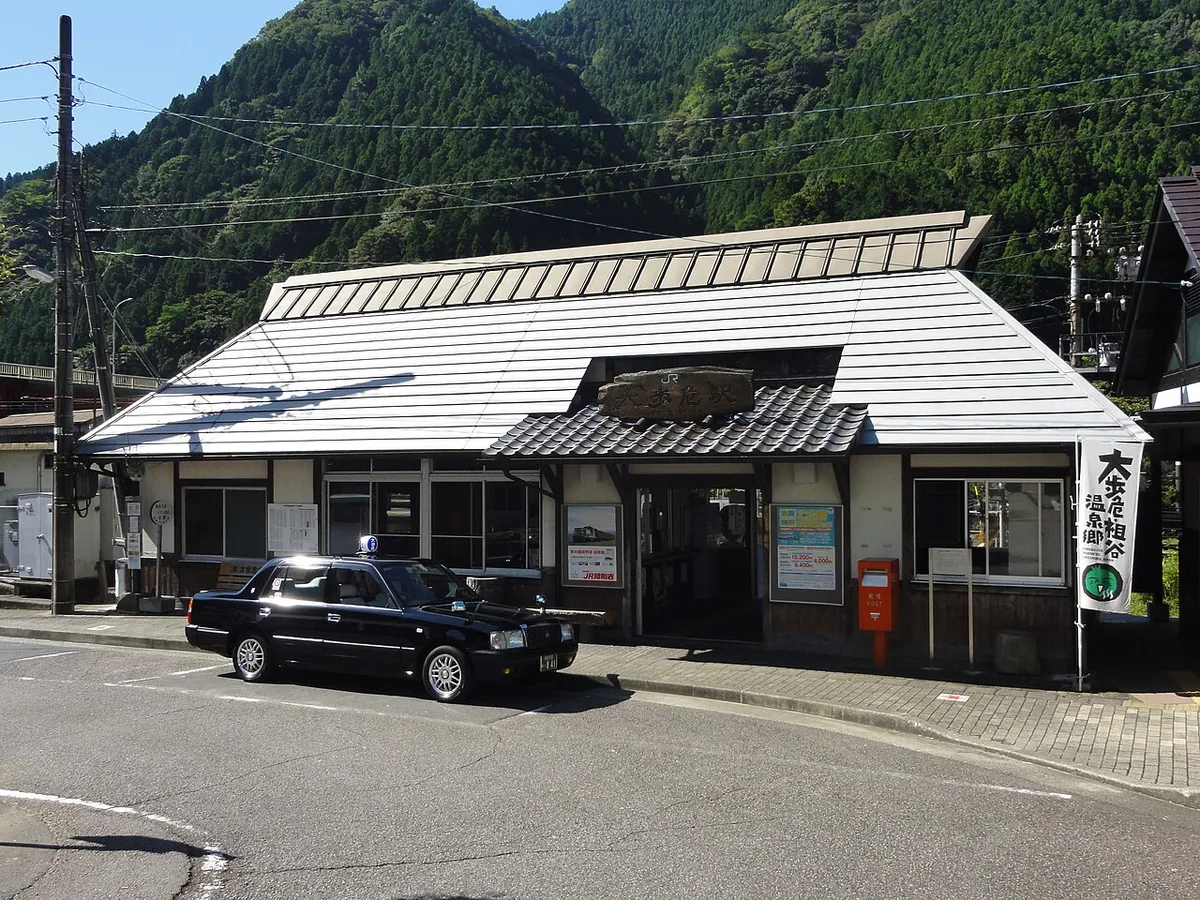
From Kazurabashi Yumebutai it is a 5-minute walk to the vine bridge.[1]
Add the Oboke boat if there is timebefore 16:30
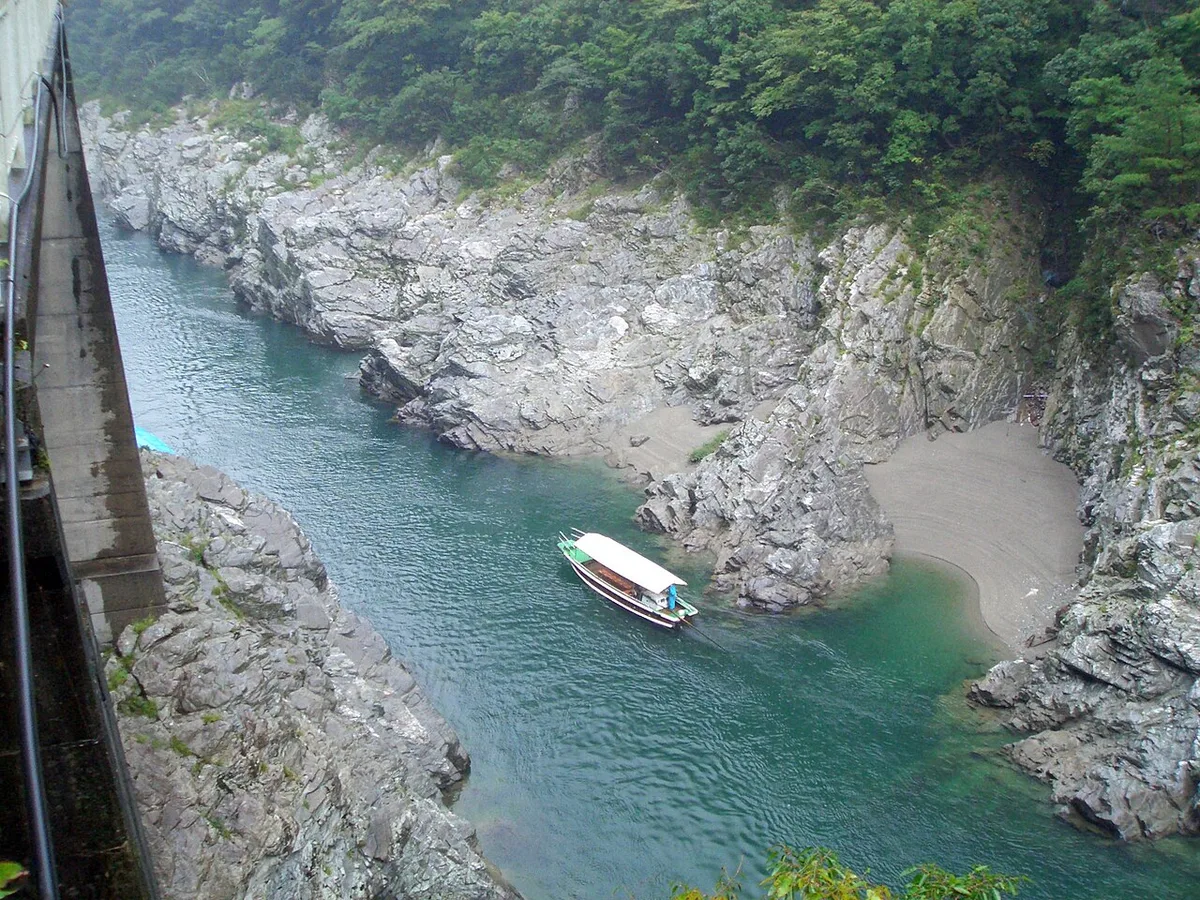
The Oboke Gorge sightseeing boat sails every day of the year, with the last departure at 16:30.[8]
Should I drive to the vine bridge in winter?
Only if you are used to snowy mountain roads. Miyoshi City gives two routes from the Ikawa–Ikeda exit, both starting on National Route 32: via Oboke on Prefectural Roads 45 and 32, approximately 37 km (50 minutes), or via Iyaguchi on Prefectural Road 32 through the Iya Gorge, approximately 33 km (1 hour), which large buses cannot use.[9] If you are unsure, take the Oboke route, the one large buses can use.

The approach along National Route 32 is on the national government’s snow list. The Ministry of Land, Infrastructure, Transport and Tourism (MLIT) includes the 29.5 km stretch in the Ikeda, Yamashiro and Otoyo area, from Ikeda in Miyoshi City to Otoyo, among its preventive traffic restriction sections for fiscal 2025.[12] MLIT says it may close such national roads in advance, depending on snowfall, to stop vehicles from becoming stranded.[13]
MLIT also reminds drivers that driving on snow-covered or icy roads without winter tires, chains or other anti-skid measures violates the Road Traffic Act.[13] Ask your rental company for winter tires when you book. For licences, tolls and renting in general, see the guide to driving in Japan.
What are the exceptions?
- Rebuilding in 2027: no crossing from January 12, 2027 to around the end of February.[3]
- Bad weather: the bridge may close temporarily during a heavy rain warning or other severe weather.[1],[2]
- Oku-Iya: closed until March 31; plan it for April onward.[4]
- The Kotobus shuttle: suspended from December to February.[6],[7]
- The Oboke boat: sails all year, but not in high water, strong wind or storms; call ahead.[8],[9]
- Timetable changes: Shikoku Kotsu’s timetable is dated October 1, 2026; check it again close to your trip, especially around New Year.[5]
Frequently asked questions
Can I see the vine bridge lit up on a winter evening?
Does the Oboke Gorge boat run in winter?
Do I need cash at the bridge?
Not necessarily. Miyoshi City’s Japanese page says cashless payment can be used for the fee.[2]
Can I stay overnight to avoid the last bus?
Yes, and in winter it takes the pressure off the last bus. Inns near the vine bridge and Oboke Gorge are listed in the where-to-stay section of the Iya Valley guide linked above.
Sources
- Iya-no-Kazurabashi (OBOKE IYA TOURIST NAVIGATION, Miyoshi City) (checked )
- 祖谷のかずら橋 (大歩危祖谷ナビ, Miyoshi City official tourism site) (checked )
- 祖谷のかずら橋架け替え工事のお知らせ — Miyoshi City Tourism Association (checked )
- Oku Iya Double Vine Bridges (OBOKE IYA TOURIST NAVIGATION, Miyoshi City) (checked )
- Bus Timetables Oboke・Iya・Tsurugisan (Miyoshi City, PDF) (checked )
- Iya Valley・Oboke Shuttle Bus (KOTOBUS) (checked )
- 琴平(香川)発着|祖谷渓谷・大歩危シャトルバス 時刻表 (コトバス) (checked )
- 大歩危峡観光遊覧船 (Oboke Gorge sightseeing boat, Oboke-kyo Mannaka) (checked )
- FAQ (OBOKE IYA TOURIST NAVIGATION, Miyoshi City) (checked )
- Access Guide (OBOKE IYA TOURIST NAVIGATION, Miyoshi City) (checked )
- Taxi Tours (OBOKE IYA TOURIST NAVIGATION, Miyoshi City) (checked )
- R7年度 予防的通行規制区間 一覧表 四国 (MLIT, PDF) (checked )
- 大雪のおそれ・冬用タイヤ装着の徹底 (MLIT Kinki, PDF) (checked )